Is there any evidence that organisms were programmed by God to quickly adapt to the earth’s changing environments?
Those who adhere to old-earth theories chide biblical creationists who propose that variations within created kinds expressed themselves in only a few thousand years. However, yeast were recently tested for their potential to "adapt rapidly through evolution" in response to changing environmental challenges, and the yeast indeed adapted.1 Were yeast varieties picked and pulled by eons of outside forces as traditional perspectives of natural selection suggest, or did yeast themselves generate new traits as they rapidly pioneered a new environment?
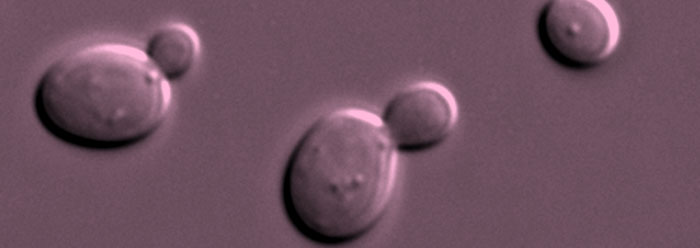
Researchers at McGill University in Montreal tracked changes in 2,000 generations of yeast as salt concentration was precisely increased in their growth medium. The experiment was intended to represent larger-scale interactions between organism and environment, making this a case study of trait variation potential within living things.
Changing salt concentration in growth medium is, strictly speaking, simply a fluctuating environmental condition, and not necessarily a "selective pressure." This change was not shown to have any tangible force that either pushed the population of yeast or "selected" for the fittest. Instead, the salty environment was passive, unthinking, and inanimate.
The yeast adapted to live amidst more salt, but how? If by neo-Darwinian evolution, then accidental mutations in some yeast built new molecules that helped the organisms cope with a saltier environment…as long as the environment didn’t change too fast for the mutations to keep pace. This change would become genetically fixed into the majority of the yeast population as a result of a supposed external power…the salt environment…"selecting for" salt-tolerant individuals in the yeast population.
Conversely, if yeast have built-in mechanisms…namely, salt-handling biochemicals…that detect salt concentrations and manage salinity inside the cell, and if yeast offspring can generate variations in those biochemical traits, they would demonstrate an ability to actively solve the environmental salt problem. From this perspective, they either adapt to saltier places or die trying. The capacity to rapidly reproduce variations in heritable traits would be a telltale sign of an internal…not external…power to adapt.
A McGill University press release stated that the yeast adaptations "can happen surprisingly fast, within 50-100 generations." The researchers called their outcome "evolutionary rescue at work,"1 without having established the source of adaptive power in yeast.
Yeast tolerance for salinity is made possible by ingenious biochemicals that detect internal salt levels and compare them with operational standards. These also accurately communicate with separate salt removal and salt retention mechanisms.
But is there a larger, heritable system that regulates and adjusts that biochemistry in response to specific environmental inputs? Yeast adapted to saltier environments in just several dozen generations, but exactly how is not yet known. However, the yeast adapted too fast to fit the standard hypothesis, since mutations accumulate too slowly. It is for this reason that the researchers expressed surprise. This quickness to adapt strongly suggests that yeast were already equipped with adaptive systems…just the kinds of ingenious systems that an omniscient Creator could have built.
Furthermore, if evolution’s mutations and selection caused this efficient yeast adaptation, and if the yeast adjustments happened in as few as 50 to 100 generations, then why have yeast been evolutionarily stagnant for uncounted trillions of generations? Yeast are still yeast after all these centuries because nothing ever evolved into yeast, and yeast themselves have not been evolving into anything else. Rather, they were specially created with a heritable ability to express differences in certain traits…differences that enable them to rapidly fill new environments.
Reference
- Evolution to the Rescue. McGill University news release, June 22, 2011, reporting on research published in Bell, G. and A. Gonzalez. 2011. Adaptation and Evolutionary Rescue in Metapopulations Experiencing Environmental Deterioration. Science. 332 (6035): 1327-1330.
* Mr. Thomas is Science Writer at the Institute for Creation Research.
Cite this article: Thomas, B. 2011. Yeast: Single Cells That Fit and Fill. Acts & Facts. 40 (9): 18.