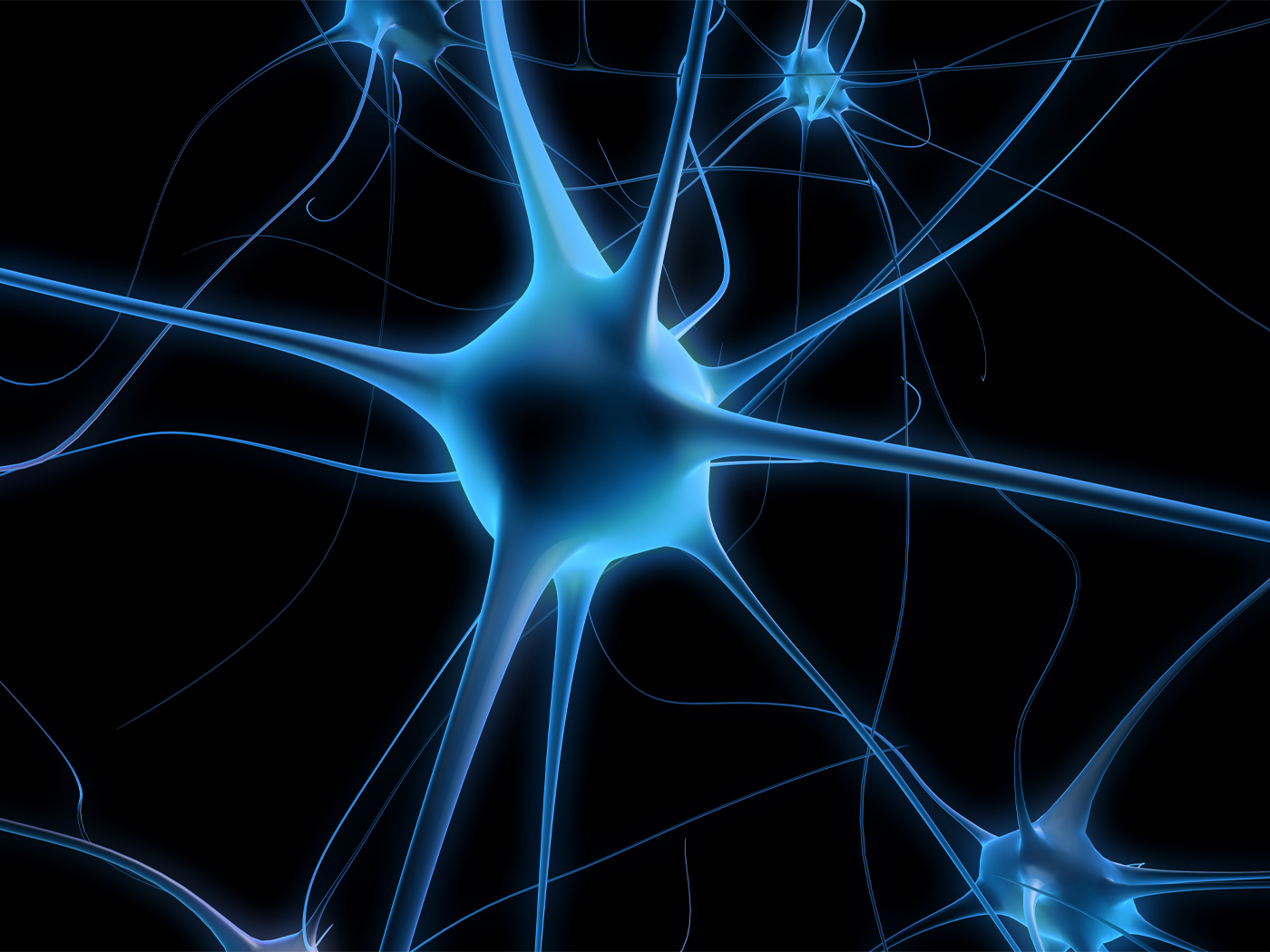
The human body has trillions of cells, each one equipped with about a billion molecules. The cells must interact constantly through countless chemical reactions in order for the body to survive and function. What keeps all those tiny machines operating smoothly together?
Biochemists have been trying to answer that question for a long time, and a new study in the journal Science reviewed the vital housekeeping activities of "scaffold proteins."1 These serve as docking stations for other proteins, switching centers for cellular communication networks, and much more. Some perform multiple functions at the same time. Clearly, scaffold proteins were not the products of mindless evolution, but of intentional creation.
The study used a plethora of action verbs to describe the activities of these proteins. "They physically assemble" other protein complexes, "control" pathways, "insulate…signaling proteins from competing inputs," "organize other classes of molecules," "coordinate communication" between adjacent cells, "build preformed assemblies," "mediate key functional changes," "target or anchor" protein complexes, "coordinate assembly-line processes," "coordinate complex feedback loops in signaling pathways," "orient" other molecules to facilitate their precise chemical reactions, "gate information flow," and "modulate" the three-dimensional shapes of other proteins.1
In sum, "scaffold proteins are analogous to circuit boards…modular platforms that wire together components and direct the flow of information…and can program complex signaling behaviors." They "appear to provide a simple and elegant solution for determining the specificity of information flow in intracellular networks."1
Cells would not function without scaffold proteins, which are "all-or-nothing" structures within themselves. This means that they require a minimum set of precise specifications in order to function. Some of those specifications include their three-dimensional shapes, which must be precisely matched to the shapes of other proteins, like locks with keys.
And once those proteins have latched on to the scaffolds, the orientation of and spacing between those proteins must be just right for them to interact properly. Some scaffold proteins hold more than five other proteins in place…like a single door lock designed to accept multiple keys. What are the odds that one portion of an evolving protein would accidentally fold into just the right shape to accommodate another protein, let alone the odds that five areas on that protein would find themselves similarly precisely shaped…and electronically fitted…so that nature could begin to "select" it?2
The study's authors described several examples of scaffold proteins that had been intentionally mutated in order to discern their function. In each case, the scaffold was rendered either less effective or ineffective, showing that altering the scaffolds is detrimental to cells. And evolution would require multiple alterations if scaffold proteins evolved from simpler, smaller proteins.
But scaffold proteins also play key roles in larger all-or-nothing biochemical communication networks and construction pathways. For example, the authors described how, without the coordinating effects of scaffold proteins, nerves would not function properly and yeast cells would not be able to reproduce.
Since vital cell systems depend on them, scaffold proteins had to have been put in place all at once. They had to have been the product of intentional engineering, not nature. And the high degree of engineering they represent could only have been accomplished by a Master Engineer, such as the Creator God described in the Bible.
References
- Good, M. C., J. G. Zalatan and W. A. Lim. 2011. Scaffold Proteins: Hubs for Controlling the Flow of Cellular Information. Science. 332 (6030): 680-686.
- The odds for a single protein fold to develop by chance processes are prohibitive. See Gauger, A. K. and D. D. Axe. 2011. The Evolutionary Accessibility of New Enzymes Functions: A Case Study from the Biotin Pathway. BIO-Complexity. 2011 (1): 1-17.
* Mr. Thomas is Science Writer at the Institute for Creation Research.
Article posted on May 17, 2011.