A Strange New Hypothesis
A new concept making its way through the scientific community holds that just a few key changes in the right genes will result in a whole new life form as different from its progenitor as a bird is from a lizard!1 This idea is being applied to a number of key problems in the evolutionary model, one of which is the lack of transitional forms in both the fossil record and the living (extant) record.
The new concept supposedly adds support to the "punctuated equilibrium" model proposed by the late Harvard paleontologist Stephen J. Gould. Dr. Gould derived his ideas from the research of geneticist Richard Goldschmidt, who believed that evolution proceeded by large influential "macro-mutations" rather than small gradual changes.2 Goldschmidt affectionately termed this the "Hopeful Monster" theory and the name stuck.3
With the longstanding neo-Darwinian model, one would expect to see many transitional organisms representing small gradual changes brought about by random genetic mutations acted upon by natural selection. While this model has many scientific difficulties, the biggest problem is that the entire fossil record is highly discontinuous, with an overwhelming absence of transitional forms between virtually all major taxa. It is quite obvious that the historical record of life does not provide the needed evidence for gradual evolutionary change.
As a paleontologist, Dr. Gould was painfully aware of these pervasive gaps in the fossil record and proposed a controversial evolutionary model in which new life forms arose suddenly, explaining the absence of transitional forms. Since the neo-Darwinian view is the predominant evolutionary model, Gould's idea was never widely accepted.
Does the "Neo-Hopeful Monster" Solve Human Evolution's Problems?
The idea of evolution occurring quickly with only a few key genetic modifications has gained notoriety with the help of Jack Horner, the famous dinosaur paleontologist who believes that modern birds evolved from dinosaurs. In Dr. Horner's view, a dinosaur could possibly be reverse engineered by just tweaking a few key genes in a chicken.4
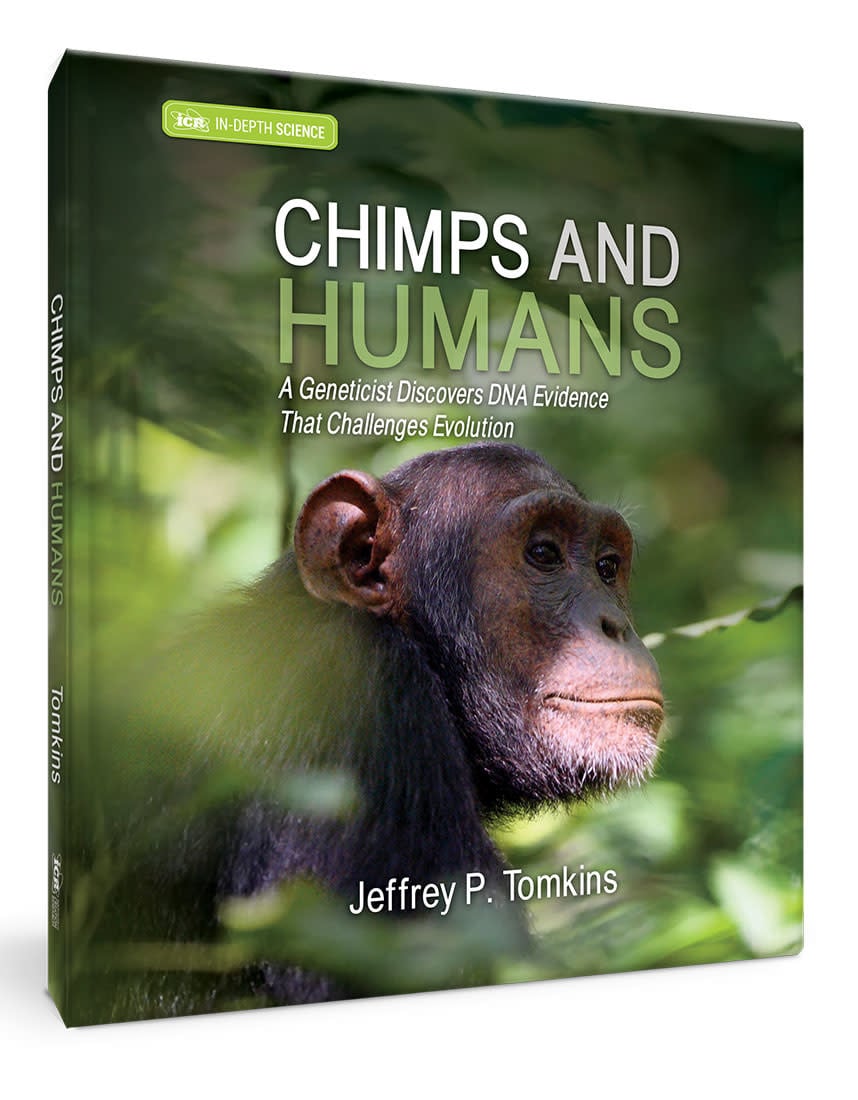
This "hopeful monster" concept has also been applied to the supposed evolution of humans. One particular difficulty with hominid evolution is the apparent genetic similarity between humans and apes, most notably the chimpanzee. This perceived close DNA similarity does not match with the marked differences in appearance and behavior. The new hopeful monster idea is seen as providing a fix for this dilemma, since it is believed that only small genetic changes in key primate genes are required to jump-start evolution and create a new form of hominid, like humans.
However, as discussed in previous articles, the supposed genetic similarity between humans and chimps was based on biased and flawed analyses and is in fact changing as more data becomes available.5 Interestingly, the most current statistics taken from the genome sequencing websites for human and chimp are now placing the chimp genome at an almost 20 percent difference in total genome size (contiguous DNA sequence) compared to human. Obviously, there is a lot more data that need to be taken into account when comparing these genomes for similarity in sequence--especially considering the fact that the supposed "junk" DNA in the human genome is known to be greater than 90 percent genetically active.
What We Know about Master Genes in Development
The hopeful monster model is based on studies in a field called Developmental Genetics. This area of research focuses on the study of genes that control the development of an organism following fertilization. If one is going to look for some mechanism to support an evolutionary model, the primary supporting data would be found here. In fact, much data is now available in a number of well-studied animal model systems (fruit fly, nematode, mouse) on the early genetic events that occur during embryogenesis.
In the very early stages of embryo development, there are a limited number of master/primary genes that turn on and control the function of many other genes downstream in the cascade of genetic activity. These master genes are typically the ones evolutionists believe would need to be tweaked to create a whole new organism. However, there are a number of very serious problems with this idea from a genetics standpoint. In fact, most molecular cell biologists do not support this concept, with some actually being quite critical and vociferous in their opposition.
The first problem is that the "master genes" in question only control the initial and earliest events in the process of a developing embryo. This stage of development is primarily associated with the polarity, orientation, quantity, and position of specific molecular gradients in the developing embryo that either allow or disallow the function of succeeding genes involved in the finer details of the embryo's development. Induced mutations in these master genes, combined with observed developmental effects in the embryo, provide a means to assess their function.
For example, in mutation studies with the Hox fruit fly genes, master control switches in early development caused legs to form in place of antennas. In other studies with vertebrates, the number of vertebrae was increased, causing lengthened tails. However, a new type of animal was never created, just some odd-looking creature with an appendage out of place or an increase in the number of some type of body segment. In many cases, embryogenesis was halted and the organism died.
Scientists have determined that these master genes primarily control the location and orientation of major body features; they don't determine the finer details of how each specific part or organ develops. It is these types of fine-level developments, and not necessarily the master genes, that make organisms unique in all of their features. These later developments in embryogenesis involve complicated interactions between thousands of different genes. Much less is known about how these later expressed genes fit in the overall scheme of development because things quickly get too complicated past the initial stages and become difficult to research.
Other aspects of gene activity--outside of which genes are turned on and interact with each other--include timing, coordination, dosage of the gene products, and diverse control mechanisms. These things must also be considered in increasingly complex levels as embryo development progresses. And because the whole system of embryo development steadily progresses over time, there are varying degrees of overlap in timing and spatiality of individual genes and gene groups which must be considered in evaluating the roles of genes in development.
What New Technologies Are Revealing About Developmental Genes
Modern high-throughput laboratory technologies and robotics are helping to advance knowledge in this area by allowing the study of large numbers of genes in single experiments. However, to make any sense out of the huge amounts of information generated, the data must be analyzed with the help of high-powered computer systems and complex computational algorithms. Even with these tools, the results are difficult for the human mind to sort through and understand, much less describe in a publication or press release. There is also the challenge of integrating massive amounts of data across experiments and laboratories. This is why molecular geneticists often reject overly simplistic ideas of just being able to manipulate a few key genes to obtain new evolutionary life forms.
Beyond the genetic difficulties associated with the hopeful monster model, one must ultimately ask: "Where did all this information come from to begin with?" Paleontologist Jack Horner is quite fond of saying that the modern chicken genome is really just a dinosaur genome with a few tweaks. But saying that evolution occurs through "tweaking" does nothing to explain the origin of the incredibly complex and highly engineered genetic information contained within the starting organism.
The stark fact is that there is no viable molecular genetic mechanism for evolution to occur. Advances in systems biology research do not support any concept of evolution. Instead, modern research is proving that the genomes of all uniquely created kinds are the result of an act of special creation and intelligent design.
References
- Caroll, S. B. 2005. Endless Forms Most Beautiful: The New Science of Evo Devo. New York: W.W. Norton and Company.
- Eldredge, N. and S. J. Gould. 1972. Punctuated equilibria: an alternative to phyletic gradualism. In T. J. M. Schopf, ed., Models in Paleobiology. San Francisco: Freeman, Cooper and Company, 82-115.
- Hopeful Monster. Wikipedia.org. Accessed October 26, 2009.
- Horner, J. and J. Gorman. 2009. How to Build a Dinosaur: Extinction Doesn't Have to Be Forever. New York: Dutton.
- Tomkins, J. 2009. Human-Chimp Similarities: Common Ancestry or Flawed Research? Acts & Facts. 38 (6): 12-13.
* Dr. Tomkins is Research Associate at the Institute for Creation Research.
Cite this article: Tomkins, J. 2009. Tweaking the Genetic Code. Acts & Facts. 38 (12): 12-13.