Jellyfish (Scyphozoa) are truly fascinating creatures with a vague and imprecise evolutionary record. Evolutionary scientists Daphne Fautin and Sandra Romano state, "The four extant cnidarian classes [including jellyfish] are identifiable as early as the Ordovician, but evolutionary relationships among them have been the subject of much debate."1
They appear in the fossil record complete and fully formed as jellyfish, as creation science predicts.2 Precambrian jellyfish fossils have been found in the Ediacara beds (formerly Vendian) of south Australia, along with the complex annelids (segmented worms). Indeed, one would think a Flood geologist (Genesis 6-9) wrote the following in regard to the rapid fossilization process that preserved these Ediacaran organisms:
Ediacara biota is not found in a restricted environment subject to unusual local conditions: they were a global phenomenon. The processes that were operating must have been systemic and worldwide. There was something very different about the Ediacaran Period that permitted these delicate creatures to be left behind. It is thought that the fossils were preserved by virtue of rapid covering by ash or sand, trapping them against the mud or microbial mats on which they lived.3
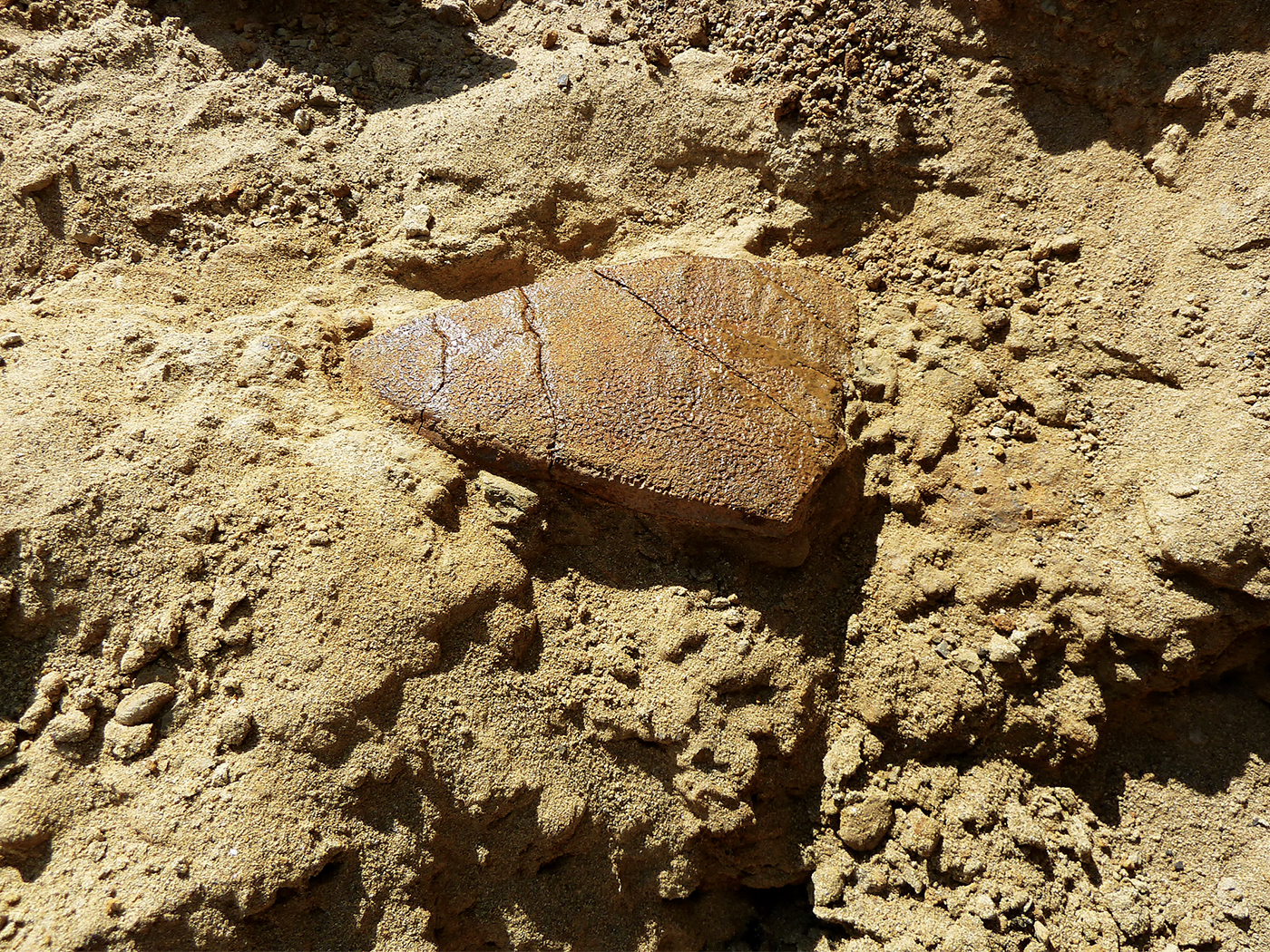
Ten jellyfish fossils that were discovered in Utah document a very rapid burial and sedimentation event--such as one would expect from a flood, perhaps? The burial was so rapid that tentacles and the unique bell shape are clearly seen.4 One can appreciate just how fast these creatures would have to be buried to preserve such detail--especially since they are about 95 percent water. Because of this discovery, National Geographic reports that jellyfish origins must be pushed back "205 million years."4 But they are still jellyfish.
Another trove of "500-million-year-old" fossil jellyfish was discovered in 2002 in the Upper Cambrian Mt. Simon-Wonewoc Sandstone in central Wisconsin.5 Ronald Pickerill of the University of New Brunswick states, "They must have been buried extremely quickly."6 Creation scientists agree--by a catastrophic event 4,000+ years ago.
Regardless, evolutionary scientists maintain that these creatures evolved from unknown non-jellyfish ancestors and were "the planet's first swimmer."7 Such a faith statement is based on Darwin's philosophy of "descent with modification," not on actual observation. A recent Popular Science article described how engineer John Dabiri and his graduate students study complex vortex rings produced by swimming jellyfish. They are involved in a field called biomechanics, where scientists and technologists attempt to copy the structures and functions of creations found in the living world. Sadly, virtually all scientists involved in biomechanics give credit to the creation, not the Creator.
Despite evolutionary assumptions, jellyfish appear as 100 percent jellyfish in the sedimentary record with all indications that they were buried rapidly in a worldwide catastrophe. Researchers study and mimic the extant (living) forms today to take advantage of their unique design features. Creation scientists alone appreciate that the incredible variation and complexity of the jellyfish reveals not time, chance, and natural processes, but the recent hand of the Creator.
References
- Fautin, D.G. and S. L. Romano. Cnidaria: Sea anemones, corals, jellyfish, sea pens, hydra. The Tree of Life Web Project at tolweb.org, hosted by the University of Arizona.
- Sherwin, F. 2007. The Eyes of Creation. Acts & Facts. 36 (7).
- Ediacara biota. Wikipedia.org.
- Photo in the News: Fossil Jellyfish Discovered in Utah. National Geographic News. Posted on nationalgeographic.com October 31, 2007.
- Clarke, T. Jellies roll back time. Nature. Published online January 30, 2002.
- Ibid. See also Hagadorn, J. W., R. H. Dott and D. Damrow. 2002. Stranded on a Late Cambrian shoreline: Medusae from central Wisconsin. Geology. 30 (2): 147-150.
- Thompson, K. 2008. The Jellyfish Engineer. Popular Science. 273 (5): 62.
* Mr. Sherwin is Senior Science Lecturer.
Cite this article: Sherwin, F. 2008. Jellyfish Reveal the Recent Hand of the Creator. Act & Facts. 37 (12): 14.