*Dr. Clarey is Research Associate at the Institute for Creation Research and earned a Ph.D. in geology from Western Michigan University.
    [body_edit] =>
	Evolutionary scientists continually search for evidence to support their claims of an evolutionary relationship between birds and dinosaurs. Their most recent attempt involves a new bird fossil named Fukuipteryx prima, found in Japan.1


	Publishing in Communications Biology, Takuya Imai and his team, from Fukui Prefectural University, described the new bird species they extracted in 2013 from Lower Cretaceous rocks in central Japan.1


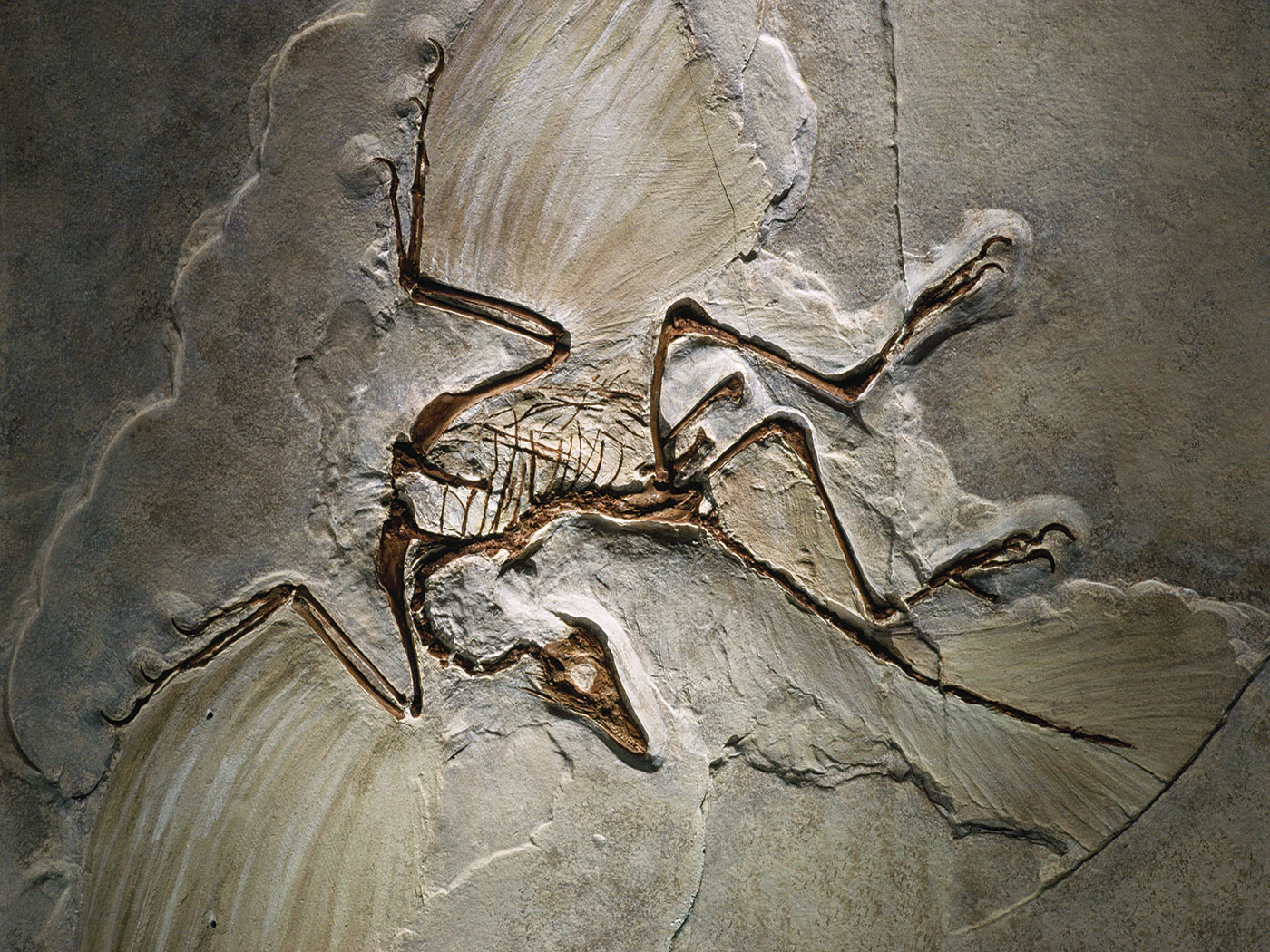
	The scientists found that the new bird species was quite similar to the so-called “first bird,” the Archaeopteryx, found in Upper Jurassic rocks in southern Germany. It had a similarly large wishbone, an unfused pelvis and claws on its wings like Archaeopteryx. But unexpectedly, the new Japanese specimen had a well-developed pygostyle instead of a long bony tail.2 A pygostyle is a fused bony plate at the end of the backbone that supports tail feathers in living birds.


	This combination of so-called “primitive” bird features found on both Fukuipteryx and Archaeopteryx (e.g., claws on the wings) along with the more “modern” pygostyle on F. prima has ruffled the feathers of evolutionary scientists. It’s simply out of place for their model. But that’s not the worst of it.


	Gizmodo reported the team’s shock, “One observation came as a big surprise to the researchers. Though the species is the most anatomically primitive bird from the Early Cretaceous, it was found in relatively young sediment [Lower Cretaceous rocks], and more evolutionarily advanced species [Archaeopteryx] have been found in sediment older than the Fukuipteryx fossil.”2 Reportedly, 35 million years older, according to secular age dates.


	“We were so surprised that we did the whole analysis again as we thought we did something wrong,” Imai told Gizmodo in an email. But it turned out the same no matter “how many times we checked our data and methods—the result did not change.”2


	To explain the fully-developed pygostyle in such a “primitive” bird, the scientists had to resort to the overused story of “multiple episodes of evolution” as a rescuing device.


	“Studies of Fukuipteryx indicates that the pygostyle evolved at least twice independently during the evolution of birds, once in the lineage of Fukuipteryx and once in the lineage of modern birds,” explained the paper’s senior author Imai.2


	And yet evolution is supposed to be a chance process with its success somehow caused by fortuitous random mutations. What are the odds that the same exact feature could ever evolve twice? And where are the transitional fossils showing the development of a pygostyle? All we find in the rock record are fully-formed pygostyles that abruptly appear on fully-formed birds.


	Modern evolutionary science predicts finely graded transitional features from dinosaurs to birds, from lower to upper rock layers. The discovery of several “primitive” features and “modern” features in a bird from Lower Cretaceous rocks is the opposite of what they predicted. It causes evolutionary scientists to have to make unsupported assumptions and unreasonable claims of multiple episodes of evolution. These scientists use speculation to try to explain these unexpected finds.


	Creation scientists dispute notions of an evolutionary link between birds and dinosaurs.3 We believe God created birds as separate kinds from the various dinosaur kinds, and on different days of Creation Week. There are no unexpected fossils showing “primitive” features found in the wrong place in the rock record. The great Flood accounts for virtually all fossils, including these extinct birds.


	Science doesn’t support the evolution of a pygostyle either once or twice. The fossil record shows that birds of all types, including F. prima and Archaeopteryx, appear fully-formed and without ancestors, just like Genesis teaches. This new fossil doesn’t surprise creation scientists in the least.


	References

	1. Imai, T. et al. 2019. An unusual bird (Theropoda, Avialae) from the Early Cretaceous of Japan suggests complex evolutionary history of basal birds. Communications Biology. 2:399.doi.org/10.1038/s42003-019-0639-4.

	2. Dvorsky, G. 2019. Stunning fossil discovery uncovers the second-most primitive flying bird. Gizmodo. Posted on gizmodo.com on November 14, 2019, accessed November 20, 2019.

	3. Clarey. T. 2015. Dinosaurs: Marvels of God’s Design. Green Forest, Arkansas: Master Books. Available at icr.org/store.


	Stage image: artistic representation of Fukuipteryx prima

	Stage image credit: Image credit: Copyright © 201 M. Yoshida. Used in accordance with federal copyright (fair use doctrine) law. Usage by ICR does not imply endorsement of copyright holder.


	*Dr. Clarey is Research Associate at the Institute for Creation Research and earned a Ph.D. in geology from Western Michigan University.
    [typeID] => 9
    [visible] => t
    [pdf] =>
    [publishURL] => new-bird-fossil-doesnt-fit-evolutionary-story
    [publishDate] => 2019-11-21
    [authorAsterisk] => t
    [domainID] => 1
    [publication] =>
    [volume] =>
    [issue] =>
    [page] =>
    [author] => Tim Clarey, Ph.D.
    [rand] => 1551469261.3182452
)
-->

New Bird Fossil Doesn't Fit Evolutionary Story
Evolutionary scientists continually search for evidence to support their claims of an evolutionary relationship between birds and dinosaurs. Their most...