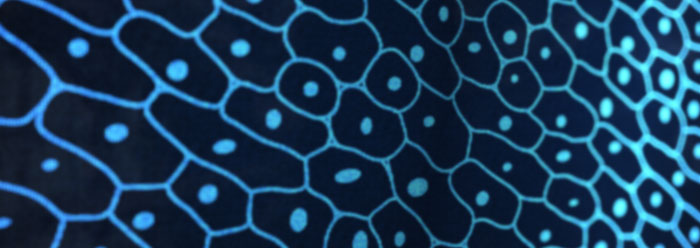
Using freeze-fracturing and an electron microscope, researchers can indirectly view the plasma membrane of a human cell. What is revealed are large, globular protein molecules that stud the bi-lipid membrane. These proteins are designed by the Creator to receive chemical information such as hormones. One large group of these cell surface proteins is called the G protein coupled receptors (GPCRs) composed of seven membrane-spanning helices. Receptors are proteins designed to process molecular signals. GPCRs are divided into five major classes and "mediate an extraordinary spectrum of cellular processes."1 For example, they are involved with the reception of light energy packets called photons resulting in our being able to see (these are the rhodopsin-like receptors, belonging to class A of the GPCR superfamily). Over one percent of the total mammalian genes are represented by GPCRs. Hormones belong to a general group called ligands, molecules that physically bind to receptors on the plasma membrane. The G proteins (composed of three subunits) are intermediaries between these membrane-spanning receptors and effectors (designed to activate cellular processes). The receptor, effector, and G proteins are all directly associated with the plasma membrane. But how the G protein subunits are actually activated after ligands attach to the receptors forming a specific complex is not well understood.
Can Darwinists document the evolution of these amazing molecules? No. According to secular biologists the GPCRs, ligands, and effectors have been around since before the Precambrian about "600 million years ago." In other words, as far as science is concerned, these complex proteins have always been what they are today, in keeping with the creation science model.
Random genetic mistakes, or mutations, supposedly made the GPCRs, and mutations are now responsible for disease conditions involving GPCRs.
mutations in the genes encoding these receptors have been implicated in numerous diseases.2
Once again, Darwinists rely on chance genetic mistakes coupled with natural selection to produce some of the most detailed and complex biological molecules ever discovered. Either they are right or the Apostle Paul is right when he stated that God's creative power is "clearly seen" in the creation (Romans 1:20).
References
- Karp, G. 2002. Cell & Molecular Biology. John Wiley & Sons, p. 636.
- Palczewski, K. 2006. G protein-coupled receptor rhodopsin. Annual Review of Biochemistry. 75:744. (See also: Madabushi, S., et al. 2004. Evolutionary trace of GPCRs. Journal of Biol. Chem. (9):8126-32.)
*Frank Sherwin is a zoologist and seminar speaker for ICR.