Two separate spider research projects published remarkable results, both in the journal Current Biology. These spiders’ specific features show their miniature skills, and cause us to marvel at their Maker.
Andrew Gordus is a neurobiologist and was the senior author of a recent spider web study. He told Johns Hopkins University, “After seeing a spectacular web, I thought, 'if you went to a zoo and saw a chimpanzee building this you'd think that's one amazing and impressive chimpanzee.' Well this is even more amazing because a spider's brain is so tiny.”1
The expertise encoded in spider brains must have come from an actual expert.2
Another study reported on the webbing from jumping spiders (family Salticidae). Unlike orb weavers that catch food that lands in their nets, jumping spiders pounce on their prey. Biologists from Harvard University noted that jumping spiders spin a silk thread during their rapid jump motion.
If these spiders spin their silk too fast, webbing would spool onto the ground in useless heaps. If they spin too slow, the silk strand would jerk them out of the air mid-jump. Therefore, “this silk must be spun at the same speed as the spider jumps.”3
The team tested the toughness of this fast-spun silk, finding it outperformed most other spider silks. How can it be so tough even when it comes out so fast? The study authors called it “extraordinary.” If the adjectives “amazing and impressive” and “extraordinary” befit that which God created, then they apply just as well to the Creator Himself.
References
1. Rosen, B. Spiders’ Web-Making Secrets Unraveled. Johns Hopkins University. Posted on hub.jhu.edu November 2, 2021, accessed November 19, 2021.
2. Tomkins, J. Spiders Have Built-In Algorithm to Construct Webs. Creation Science Update. Posted on ICR.org November 29, 2021, accessed November 30, 2021.
3. Chen, A., K. Kim, P.S. Shamble. Rapid mid-jump production of high-performance silk by jumping spiders. Current Biology. 31: R1403–R1423.
Image: hackled orb weaver
Image Credit: Gordus Lab © Adapted for use in accordance with federal copyright (fair use doctrine) law. Usage by ICR does not imply endorsement of copyright holder.
*Dr. Brian Thomas is Research Scientist at the Institute for Creation Research and earned his Ph.D. in paleobiochemistry from the University of Liverpool.
Spider Silk Secrets Stun Scientists
More God's Design Is an Engineering Wonder
Complex Calls Confirm Creation
Bird calls are something we often take for granted. After all, when we listen to them, we hear squawks, warbles, and chirps. Could there actually be...
Bold Claim, Hidden Design: What Salterella Reveals Abou.,.
What if a fossil no bigger than a grain of rice showed engineering so precise that it still puzzles scientists? That is the intrigue surrounding Salterella,...
How Algae Do Fine When Tossed at Sea
How would you do if someone spun you around every few seconds all day long? Marine algae repeatedly get tossed about in coastal surf, and they cope quite...
More Creation Science Update
''Prehistoric'' Reptile Designed to Swim
Locomotion in the human and animal world means the power to move from one place to another.
Recently, evolutionists have published research regarding...
''Ancient'' Katydid Fossil is...a Katydid
A fascinating discovery of a fossil insect has recently been made by evolutionists in Colorado. The description once again points clearly to the effects...
An Amazing Plant Defense
Although plants are not alive in the biblical sense,1 scientists continue to discover just how complex they are.2
It has been...
The Latest
Lowly Spider Inspires Amazing 3D Camera
Who would have thought that an extremely energy-efficient 3D camera is in a large part due to a tiny jumping spider?
Engineers at Northwestern University...
Hot Water, Cracked Rock, but No Life
Could an asteroid impact really spark life? A recent AGU Advances paper says early asteroid impacts might have cracked Earth’s crust and made...

Creation Advocate Mike Riddle Goes Home to Be with the Lord
by Randy J. Guliuzza, P.E., M.D., and Jake Hebert, Ph.D.*
Following a lengthy illness, Mike Riddle, founder and president of Creation Training Initiative...
When DNA Stop Signs Change Their Message
Imagine an intersection where the red stop sign suddenly means, “Right turn only.” Most drivers wouldn’t reach their destinations...
August Wallpaper
"The heavens declare the glory of God; and the firmament shows His handiwork" (Psalm 19:1, NKJV)
ICR's August 2026...
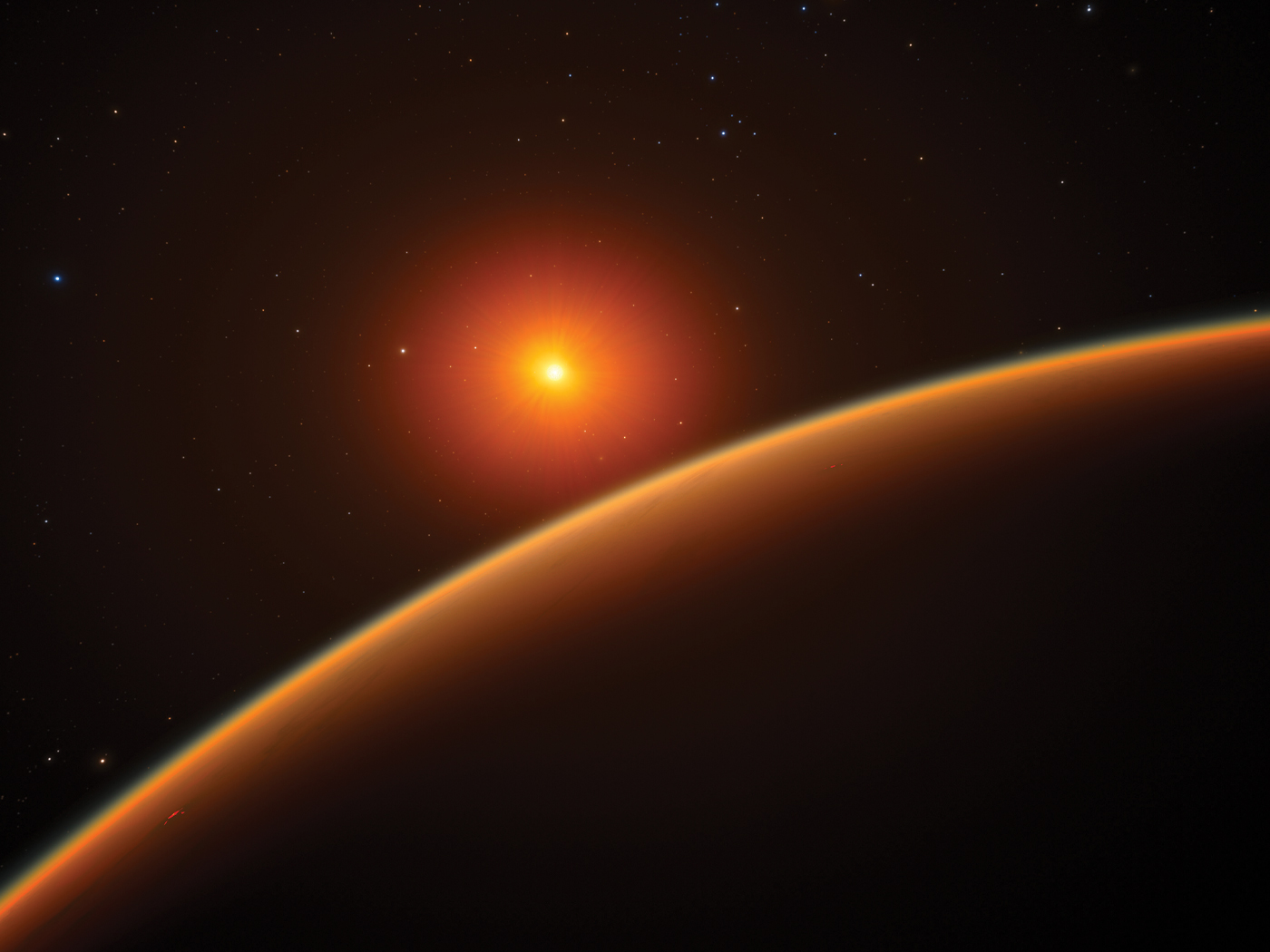
Helium in Exoplanet's Atmosphere: Apparent Evidence of Youth
The prestigious journal Science has published evidence that a planet orbiting a red dwarf star has an atmosphere.1,2 This extrasolar planet,...

CREATION PODCAST
Christian Geologist: I Studied Rocks for 13 Years - What I Found...
Geologist Dr. Tim Clarey spent 13 years digging into rock layers from every continent on Earth, and what he found doesn't match what most people were taught...
Giant Fossil Shark Consistent with Extreme Pre-Flood Longevity
Paleontologists recently rediscovered the largest known set of vertebrae from the giant fossil shark Otodus megalodon, popularized by The Meg movies...
Faster Chemistry Is Not the Same as Life
A pile of metal, wires, and computer chips will not assemble itself into a working airplane. The parts may have useful properties, but they still need...
Fearsome Cleveland Fossil Is Still a Fish
According to evolutionary theory, fish went through a variety of forms until they evolved into the fish we see swimming today. Recently, what conventional...
Shop Related Products
Living in Light of Genesis
$15.99


Adam or Apes
$12.99