






The Institute for Creation Research exists to support the local church through worship, edification, and evangelism by providing Scripture-affirming research that opposes the deification of nature and glorifies our Creator, the Lord Jesus Christ. God's Word can be trusted with everything it speaks about, and science confirms the truth in Scripture.

Creation Foundations
Creation and Adaptations
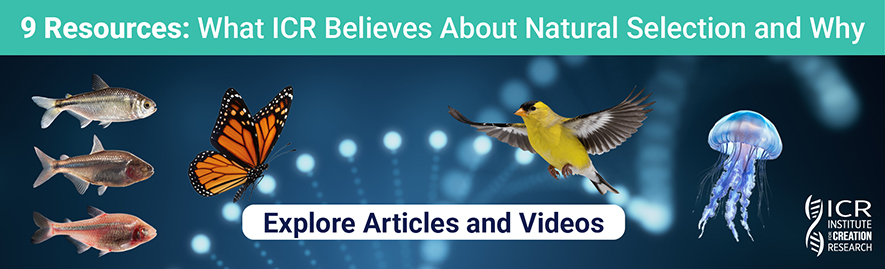
Imagine if living creatures acted like tiny engineers, constantly sensing, problem solving, and adjusting to their surroundings in real time. Emerging evidence suggests that they do and that systems inside creatures, not outside factors, make it happen.

Creation Foundations
Dinosaurs and Fossils
What roles do imagination versus science play in popular stories of fearsome dinosaurs evolving into birds, thriving in cold environments, or even having gone extinct tens of millions of years ago? Examine where and why fiction has become “fact” and theory has become “truth” in conventional circles.

Creation Foundations
Global Flood
A huge, sturdy, floating box one and a half football fields long; steady rain for 40 straight days; water covering and destroying the highest mountains of the time; eight lone survivors caring for representatives of every kind of land animal—could it all be true? Volumes of seldom-referenced science and history confirm the Genesis Flood account.






Featured Science

Sickle Cell Research Confirms TOBD Prediction: Directed Genetic Adaptations
We’ll discuss two powerful genetic studies of human adaptive response to disease, one of which relates to that venerated icon of selectionists: the sickle cell trait and its relative protection against malaria. These studies allow us to put the basic assumptions of Darwinian selectionism and a TOBD to a head-to-head test. They confirm the basic premises of the TOBD and completely contradict evolutionary assumptions.
Read more



Creation Kids

Kids on Mission
Know a K-6th grader who loves science?
Click the link to learn more about ICR’s Junior Creation Scientist club.
Fall Registration is closed. Registration will reopen in the Spring.