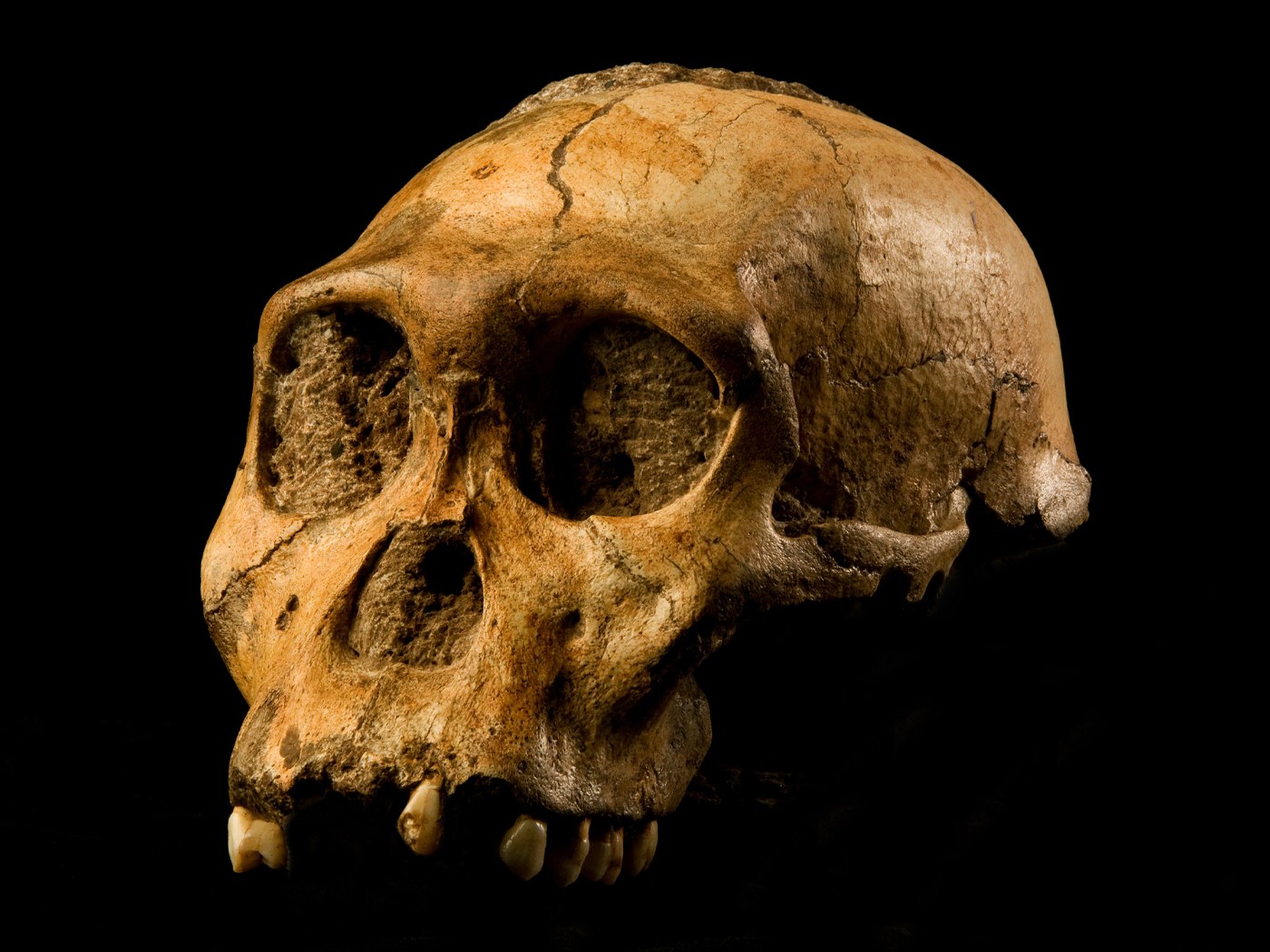
According to standard notions of human evolution, the controlled use of fire represented a key turning point in the development of modern humans from ape-like ancestors. So, evolutionary paleoanthropologists have been interested in pinpointing when humans began using fire. New evidence from South Africa's Wonderwerk cave has established that someone was burning wood and bones much earlier than widely thought. But is its age assignment trustworthy?
A report in the Proceedings of the National Academy of Sciences assigned the stratum to an ancient and long lasting time period called the Acheulean.
Until this discovery, most had believed that man's use of fire had evolved perhaps 700,000 years ago, but the archaeological stratum inside the cave contains tiny charred remains dated to within approximately 290,000 years of one million years ago. The study authors wrote that this is "a time range that fits with current understanding of the chronological position of the early Acheulean within the ESA [Earlier Stone Age] in Southern Africa."1
What would these researchers have done with age estimates that did not fit the consensus? Discordant ages are routinely discarded or explained away as contaminants. These kinds of dates are systematically hand-fitted to the pre-existing evolutionary dating scheme.2
Study authors mentioned that their age "fits with current understanding"—betraying their circular evolutionary age dating procedures. First, only those age indicators that fit the consensus are selected for publication. Afterward, scientists point to those published dates as confirmation of great antiquity.
The charred bits of bone and plant matter fit quite well within the timeline of biblical creation. So-called "Earlier Stone Age" remains in South Africa most likely correspond to peoples who, having been recently dispersed from the Tower of Babel, were the first to have migrated to that area. Those pioneers undoubtedly lived in caves for a time, since they had not yet had time to build homes.
Referencing God's Word as a historical resource is more responsible than referencing man's word because the Bible is based on reliable eyewitness accounts and not circular sources.
References
- Berna et al. Microstratigraphic evidence of in situ fire in the Acheulean strata of Wonderwerk Cave, Northern Cape province, South Africa. Proceedings of the National Academy of Sciences. Published online before print, April 2012.
- Morris, J. 2007. The Young Earth, Revised and Expanded. Green Forest, AK: Master Books, 11.
* Mr. Thomas is Science Writer at the Institute for Creation Research.
Article posted on May 21, 2012