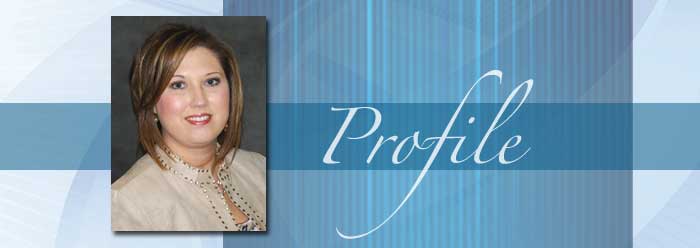
Rhonda Forlow first attended college on a nursing scholarship, but after a few years decided she wanted to work with special education children instead."I switched colleges and started studying psychology and special education," she said in a recent interview.
She graduated in 1993 from the University of Virginia’s College at Wise and went to work with students with learning disabilities, emotionally disturbed students, and mentally retarded students for a public school district. She also started a program in her district for middle grade and high school students whose cognitive ages ranged from six months to upper elementary age.
During that time, she pursued a master’s degree in educational leadership and policy analysis at East Tennessee State University in Johnson City. She also worked at urban elementary and high schools as a teacher and later as an assistant principal. After obtaining her degree in 1997, she became an administrator of elementary special education in Charlottesville, Virginia.
She received her doctorate in education from the University of Virginia in December 2001 and moved from special education administration to school administration as an elementary school assistant principal. "I did that until I felt the Lord calling me to stay at home with our first child," she said.
After living in Pennsylvania and doing independent consulting work with Christian schools and parents of special education students, Dr. Forlow and her family moved to Texas in 2008 to allow her husband, Dr. Brad Forlow, to attend Southwestern Baptist Theological Seminary in Forth Worth. She worked at Burleson High School with special education students and substituted for assistant principals.
She said she wasn’t very familiar with the Institute for Creation Research before her husband started working part-time here.
"Since Brad’s background is in science, he and I would have lots of conversations about evolution and creation," she said. "Although I was raised in a strong Christian home, my church didn’t know how to make differences between the two. When he started working for ICR, I learned more about [the differences]."
The disparity between evolution and science became more apparent as Dr. Forlow worked as a science special education teacher. "There were many things that I had to teach that I found questionable as a teacher. I would research on my own and decide what I would or wouldn’t say, basically," she said.
"We also have our own children who are very interested in different aspects that go along with science," she said. "We wanted to be able to have the knowledge to help them understand things, like where dinosaurs came from, what happened to them, and how the world was really formed. We just want to have the right information to give them."
Dr. Rhonda Forlow started full-time as ICR’s Education Specialist in January 2011, bringing her invaluable K-12 experience to the ministry. She’s currently working with a local church and a couple of Christian schools to put together creation science programs for young people. Her other projects include evaluating ICR’s curriculum supplements and going through the website to see how it can be made more user friendly for educators and parents."Eventually, I would love to write church curriculum for kids based on creation and what creation scientists believe and why they believe that," she said. "Something larger than the typical ’on the first day, God created’ type of curriculum."
"I believe education starts not just in the home but also in the church," she said. "And if our leaders in the church and our children don’t come up through the church knowing what to believe, then they’ll be susceptible to believe anything out there and not knowing why it’s wrong. I think our duty and our obligation is to teach them the truth."
* Ms. Dao is Assistant Editor at the Institute for Creation Research.
Cite this article: Dao, C. 2011. Dr. Rhonda Forlow: ICR’s New Education Specialist. Acts & Facts. 40 (3): 19.