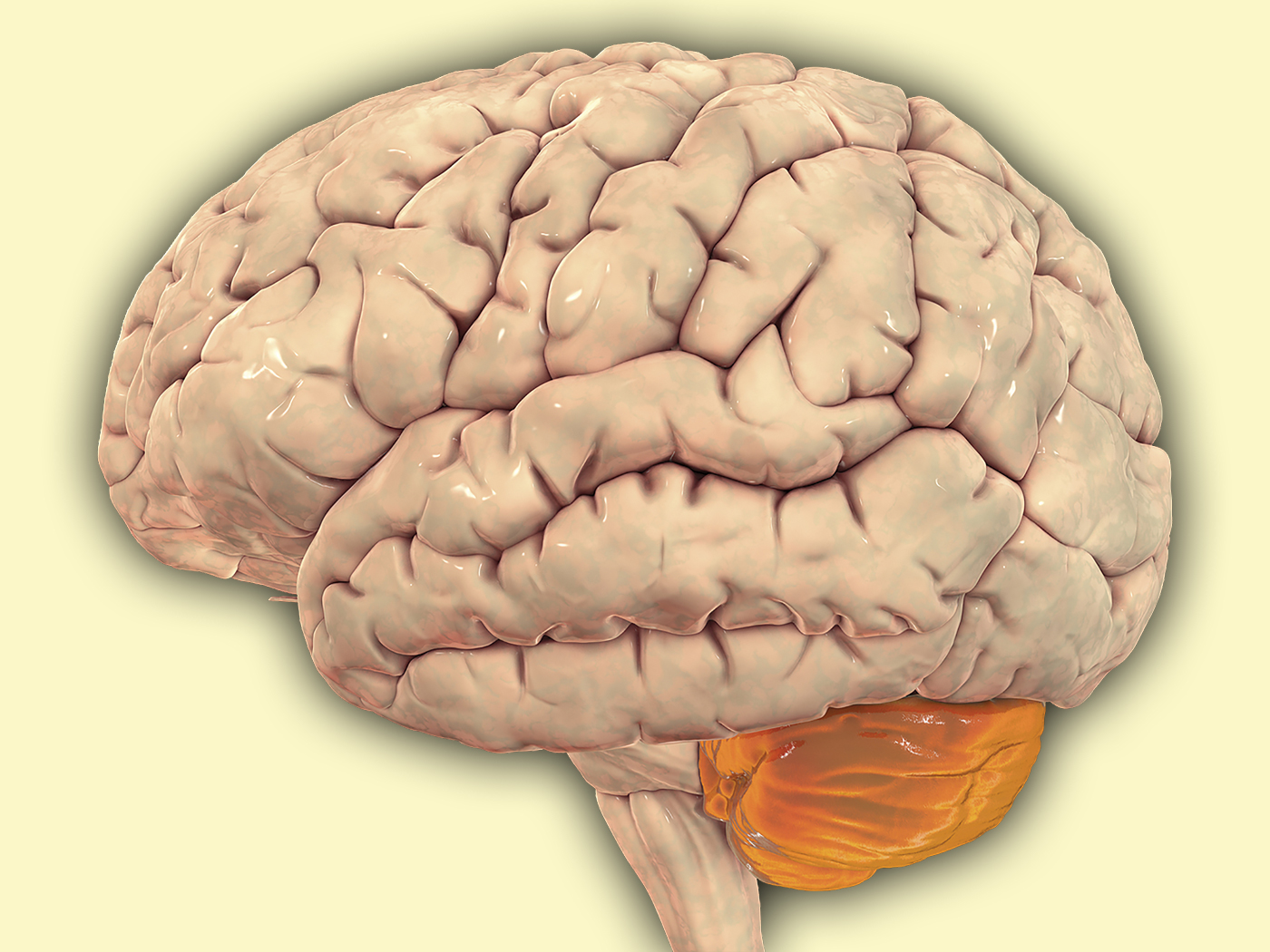
Organic life is the antithesis of simplicity. Theologians, science historians, philosophers, scientists, and science writers have struggled through the decades to carve out a good definition of this cryptic term, but a lucid definition of life continues to evade even the brightest minds.
However one describes it, life truly is complex. An excellent example of how intricate life can be is found in the genome (the total genetic makeup of an organism or cell). In 1990, the ambitious Human Genome Project was initiated to identify and map the genes (DNA) of the human genome. A recent Nature article stated:
"We fooled ourselves into thinking the [human] genome was going to be a transparent blueprint, but it’s not," says Mel Greaves, a cell biologist at the Institute of Cancer Research in Sutton, UK. Instead, as sequencing and other new technologies spew forth data, the complexity of biology has seemed to grow by orders of magnitude.1
In regard to genome complexity, biologist Remo Rohs and his colleagues wrote:
Genomes are composed of both protein-coding and nonprotein-coding DNA sequences. Cells have the remarkable ability to decipher the information that is incorporated in both types of sequences. Biologists, on the other hand, are currently unable to do what the cell does…to interpret nonprotein-coding DNA sequences.2
There are two domains within the "superkingdom" prokaryotes: the bacteria and the archaea (which resemble bacteria but have certain differences, such as the composition of their cell walls). Science has shown how naive the long-held assumption of "simple bacteria" is. Indeed, there is nothing simple about these tiny prokaryotes. A decade ago, ICR published an article outlining bacterial complexity.3 Not surprisingly, bacteria and other single-cell microbes continue to amaze biologists. A recent article in Microbe quoted naturalist (and outspoken anti-creationist) Edward O. Wilson as saying:
Ten billion bacteria live in a gram of ordinary soil....I need venture no farther than ten paces outside my laboratory building. The jaguars, ants and the orchids would still occupy distant forests in all their splendor, but now they would be joined by an even stranger and vastly more complex living world virtually without end.4
The article’s authors exclaimed:
We are just beginning to get a glimpse of how extremely complex the microbial world really is! Just attempting to tabulate the number of species present in any given location reveals this remarkable complexity.4
They are correct. The microbial world is "extremely complex." Two German scientists said in regard to intracellular signaling in bacteria:
Despite the apparent simplicity of the basic signaling mechanisms, signal processing in bacteria can show a large degree of complexity. The magnitude of internal and external stimuli means that behavioral decisions must involve cross-regulation between individual sensory systems. At the same time, individual signals have to be insulated against unspecific cross talk to preserve the specificity of input-output relations.5
In the face of such enormous complexity, secular scientists must engage in "just-so" accounts of its origins. In regard to how bacteria respond to the vast assortment of environmental signals, six evolutionists said, "A wide range of signal perception modes have evolved."6 This explains nothing. Neither does stating that membrane pores (channels) in microbes "have evolved to be usually closed (in an occluded conformation)."7 Scientists have never observed signal perception modes "evolving" or membrane channels "evolving" to be usually closed. Creationists maintain that the detailed conditions required for their very existence (life) were created "in the beginning."
References
- Hayden, E. C. 2010. Human genome at ten: Life is Complicated. Nature. 464: 664-667.
- Rohs, R. et al. 2010. Origins of Specificity in Protein-DNA Recognition. Annual Review of Biochemistry. 79: 233-269.
- Sherwin, F. 2001. Just How Simple Are Bacteria? Acts & Facts. 30 (2).
- Kolter, R. and S. Maloy. 2011. Darwin and Microbiology. Microbe. 6 (1).
- Kentner, D. and V. Sourjik. 2010. Use of Fluorescence Microscopy to Study Intracellular Signaling in Bacteria. Annual Review of Microbiology. 64: 373-390.
- Krell, T. et al. 2010. Bacterial Sensor Kinases: Diversity in the Recognition of Environmental Signals. Annual Review of Microbiology. 64: 539-559.
- Kung, C., B. Martinac and S. Sukharev. 2010. Mechanosensitive Channels in Microbes. Annual Review of Microbiology. 64: 313-329.
* Mr. Sherwin is Senior Science Lecturer at the Institute for Creation Research.
Cite this article: Sherwin, F. 2011. Life: More Complicated Than We Can Imagine. Acts & Facts. 40 (3): 15.