A coal mine in the Cerrejón Formation of Colombia has yielded a gold mine of fossils. This particular cache preserved a time in earth history when the tropical climate was quite different from today’s. Evidence indicates that it was warmer and wetter. But despite the different climate, the fossilized tropical plants were the same as today’s, albeit less diverse.
The fossils reveal that ancient rainforests “were composed of the same plant families that now thrive in rainforests.” Even more remarkable, supposedly ancient fossil leaves—some of them very well preserved—were identifiable “down to the genus level.”1
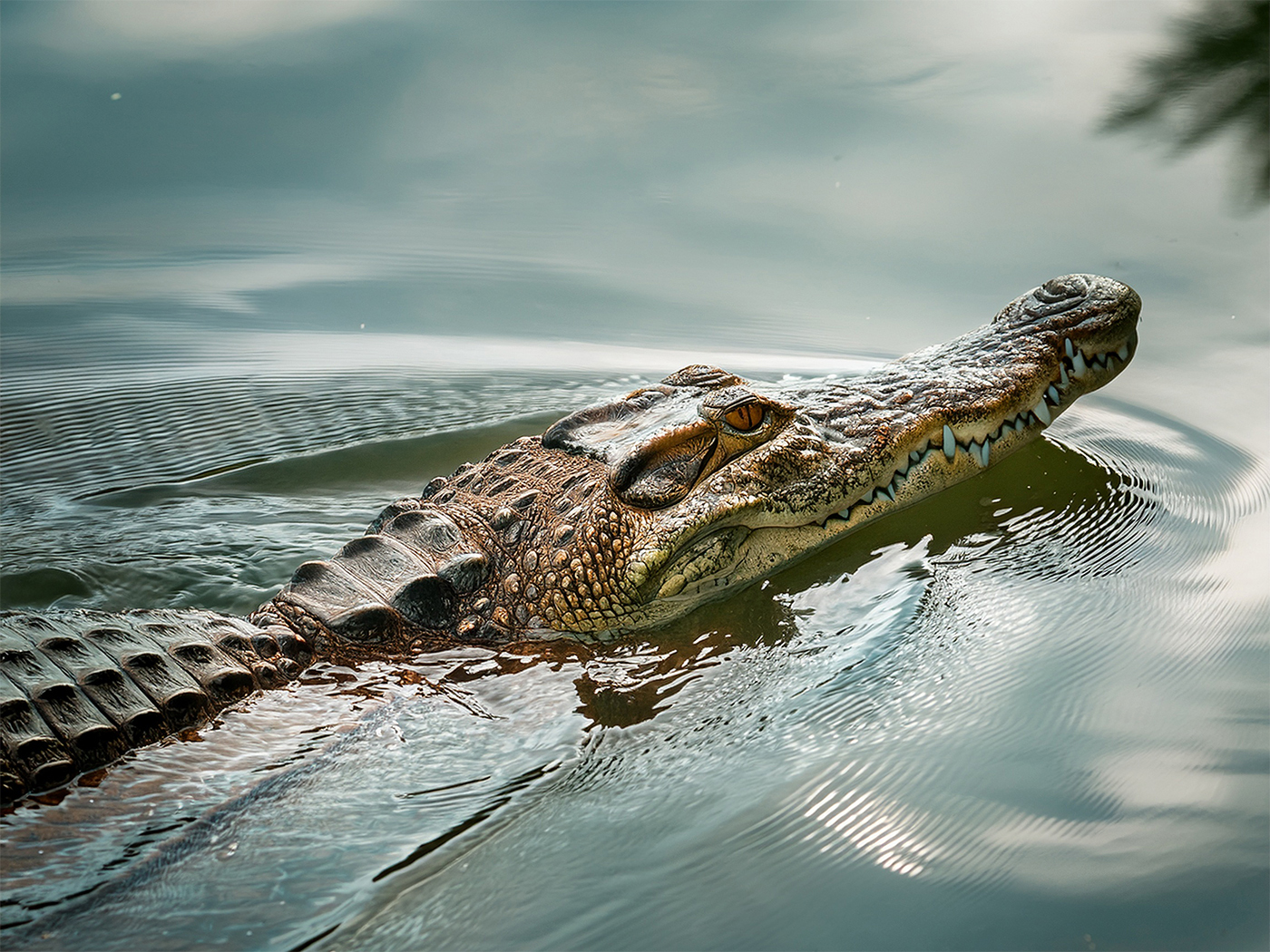
In addition to the plants, the fossilized animals seemed quite similar to their modern counterparts. For example, it was from this same formation that researchers had earlier uncovered fossil remains of a huge snake that they called “Titanoboa.” In a University of Florida press release, one researcher stated, “like Titanoboa, which is clearly related to living boas and anacondas, the ancient forest of northern Colombia had similar families of plants as we see today in that ecosystem.”1
None of these observations come as a shock those who subscribe to the concept that plants and animals were specially created. However, the claim that these fossils are 58 million years old may be difficult to support. Given all that time, why has no evolutionary change occurred in the plants or animals described?
One common argument used to defend evolution in the face of a lack of fossil evidence is that certain creatures failed to evolve because their environment has stayed the same from then until now. Without changes in the environment, it is claimed, there would not have been a selective pressure to drive their evolution.
But in the Cerrejón Formation, the “legumes, palms, avocado and banana — have maintained their ecological dominance despite major changes in South America’s climate and geological structure.”1
So in this instance, there has been enough time for evolution to have occurred, and there were enough “major changes” in the area to provide selection pressure. This would seem an ideal test case for large-scale evolution. But the existence of the same flora and fauna then as today shows that evolution did not occur at all. The remarkable similarities are also consistent with a much younger date for the fossils.
Rather than an inexplicable example of creatures that remained evolutionarily dormant for “millions of years,” the best fit for the evidence is their recent creation as distinct plant and animal kinds.
Reference
- Kanapaux, B. Plant fossils give first real picture of earliest Neotropical rainforests. University of Florida press release, October 15, 2009, reporting research published in Wing, S. L. et al. Late Paleocene fossils from the Cerrejón Formation, Colombia, are the earliest record of Neotropical rainforest. Proceedings of the National Academy of Sciences. Published online before print October 15, 2009.
Image Credit: Florida Museum of Natural History
* Mr. Thomas is Science Writer at the Institute for Creation Research.
Article posted on October 28, 2009.