Evolution predicts that as new species of animals are developed by mutation and selection, they will form offspring that will not interbreed. This prevents the new species from being recombined back into the taxonomies of their progenitors. Consequently, part of the definition for species--according to evolution--is that they will not interbreed and have offspring. Animal species are often identified by distinctive characteristics such as coloration, shape, size, skin patterns, reproductive processes, etc., but interbreeding is often ignored in practice.
In Scripture, the term kind is used rather than the term species for categories of animals. For example, in Genesis 1:24: "And God said, Let the earth bring forth the living creature after his kind, cattle, and creeping thing, and beast of the earth after his kind: and it was so." The phrase "after his kind" signifies that a distinction exists between kinds and that each kind carries the genetic information necessary for the production of descendants. So, it would appear that kind is the true distinction, not species. In Hebrew, the term for created kind involves the word bara, which means to create from nothing--something only God can do. Consequently, many creationists have come to use the term baramin to discuss categories of animals.
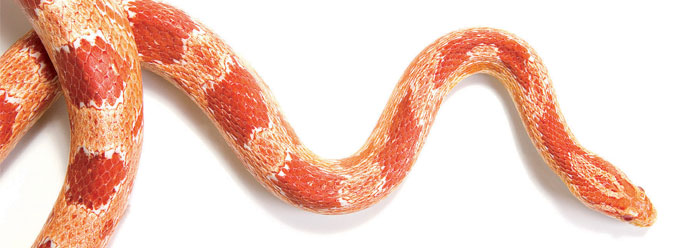
A major field of creation research has developed within the last twenty years or so that attempts to demonstrate that speciation falsely supports the idea of evolution. One of the methods to demonstrate this fact is to show that many species can interbreed and produce offspring, which is quite the opposite of the prediction of evolution. In a paper entitled "Snake Hybridization: A Case for Intrabaraminic Diversity," to be presented at the Sixth International Conference on Creationism in Pittsburgh August 3-7, 2008, Glen Fankhauser and Kenneth Cumming have shown the successful production of offspring from interbreeding eleven species of snakes.
Their study examined hybridization (the production of offspring from two different breeds, varieties, or species) of several species of non-poisonous snakes through the use of both natural breeding methods and scent disguise to fool the different species to interbreed. Eleven different species of three different genera (the conventional grouping of plants or animals between a species and a family) were used in this experiment. The products of mixed breeding were expected to resemble midpoints of color and pattern between the parental species. Banding patterns appeared to be dominant over blotches and stripes.
The most interesting finding was that varieties of reptiles showing an absence of the dark skin pigment melanin exhibited alternative hereditary characteristics regardless of the fact that they were members of different genera. When the California Kingsnake (L.g.californiae) and the Corn Snake (E.g.guttata) were crossed, albinism appeared in the first filial generation hybrid. All types of the hybrids produced were viable and fertile. As such, these snakes are most likely examples of diversity within the created kinds rather than between evolutionary species. North American species of snakes of the genera Lampropeltis, Pituophis, and Elaphe, while classified in separate genera, may actually be more closely related than evolutionary biology predicts.
This research adds viability, homologous genes, and pigment variations to the list of criteria for recognizing baramins. Whereas the ability of reptiles to hybridize is dismissed by the evolutionist as chance encounters by rogue individuals that are unconcerned with the integrity of the species, the creationist can instead embrace hybridization and incorporate its existence into his explanation of the Creator's divine plan. The occurrence of successful hybridization closely fits the creationist model, as opposed to the evolutionist model.
*Dr. Vardiman is Director of Research.
Cite this article: Vardiman, L. 2008. Can Divergent Species of Snakes Interbreed? Acts & Facts. 37 (8): 6.