“And God made two great lights; the greater light to rule the day, and the lesser light to rule the night: He made the stars also” (Genesis 1:16).
On the Fourth Day of Creation Week, the Lord Jesus had formed the sun and the moon and all the stars of heaven. There had been “light” on the first three days, but now there were actual lights! Not only would the earth and its verdure be a source of beauty and sustenance to man, but even the very heavens would bring joy and inspiration to him. Furthermore, they would guide his way, and keep his time.
But instead of the stars of heaven turning man’s thoughts and affections toward his Creator, they had been corrupted and identified with a host of false gods and goddesses. Furthermore, instead of creating a sense of awe and reverence for His majesty, they had bolstered the humanistic belief that the earth is insignificant and meaningless in a vast, evolving cosmos. Perhaps thoughts such as these troubled the mind of the Lord that night as He lay on the mountain gazing at the lights He had long ago made for the darkness.
When morning came and Day Four of Redemption Week began, He returned to Jerusalem, where many were waiting to hear Him. He taught in the temple (Luke 21:37,38), but the synoptic gospels do not record His teachings. This lack is probably supplied in the apparently parenthetical record of His temple teaching as given only in John’s Gospel (12:20–50), because there He twice compared Himself to the lights He had made. “I am come a light into the world, that whosoever believeth on me should not abide in darkness.” “Yet a little while is the light with you. Walk while ye have the light, lest darkness come upon you” (John 12:46,35). He who was the True Light must become darkness, in order that, in the new world, there would never be night again (Revelation 22:5). HMM

The Lights Of The World
More Days of Praise

The Three Appearings of Christ
“For Christ is not entered into the holy places made with hands, which are the figures of the true; but into heaven itself, now to appear in...
What Began at Philippi
“Paul and Timotheus, the servants of Jesus Christ, to all the saints in Christ Jesus which are at Philippi...Grace be unto you, and peace,...
The Obedience of Christ
“I can of mine own self do nothing: as I hear, I judge: and my judgment is just; because I seek not mine own will, but the will of the Father...
The Latest

Daddy Longlegs: Going to Great Lengths for Fatherhood
A male daddy longlegs may spend days guarding a cluster of eggs. He cleans them and drives away threats.1 A new study says this type of parental...
Lowly Spider Inspires Amazing 3D Camera
Who would have thought that an extremely energy-efficient 3D camera is in a large part due to a tiny jumping spider?
Engineers at Northwestern University...
Hot Water, Cracked Rock, but No Life
Could an asteroid impact really spark life? A recent AGU Advances paper says early asteroid impacts might have cracked Earth’s crust and made...

Creation Advocate Mike Riddle Goes Home to Be with the Lord
by Randy J. Guliuzza, P.E., M.D., and Jake Hebert, Ph.D.*
Following a lengthy illness, Mike Riddle, founder and president of Creation Training Initiative...
When DNA Stop Signs Change Their Message
Imagine an intersection where the red stop sign suddenly means, “Right turn only.” Most drivers wouldn’t reach their destinations...
August Wallpaper
"The heavens declare the glory of God; and the firmament shows His handiwork" (Psalm 19:1, NKJV)
ICR's August 2026...
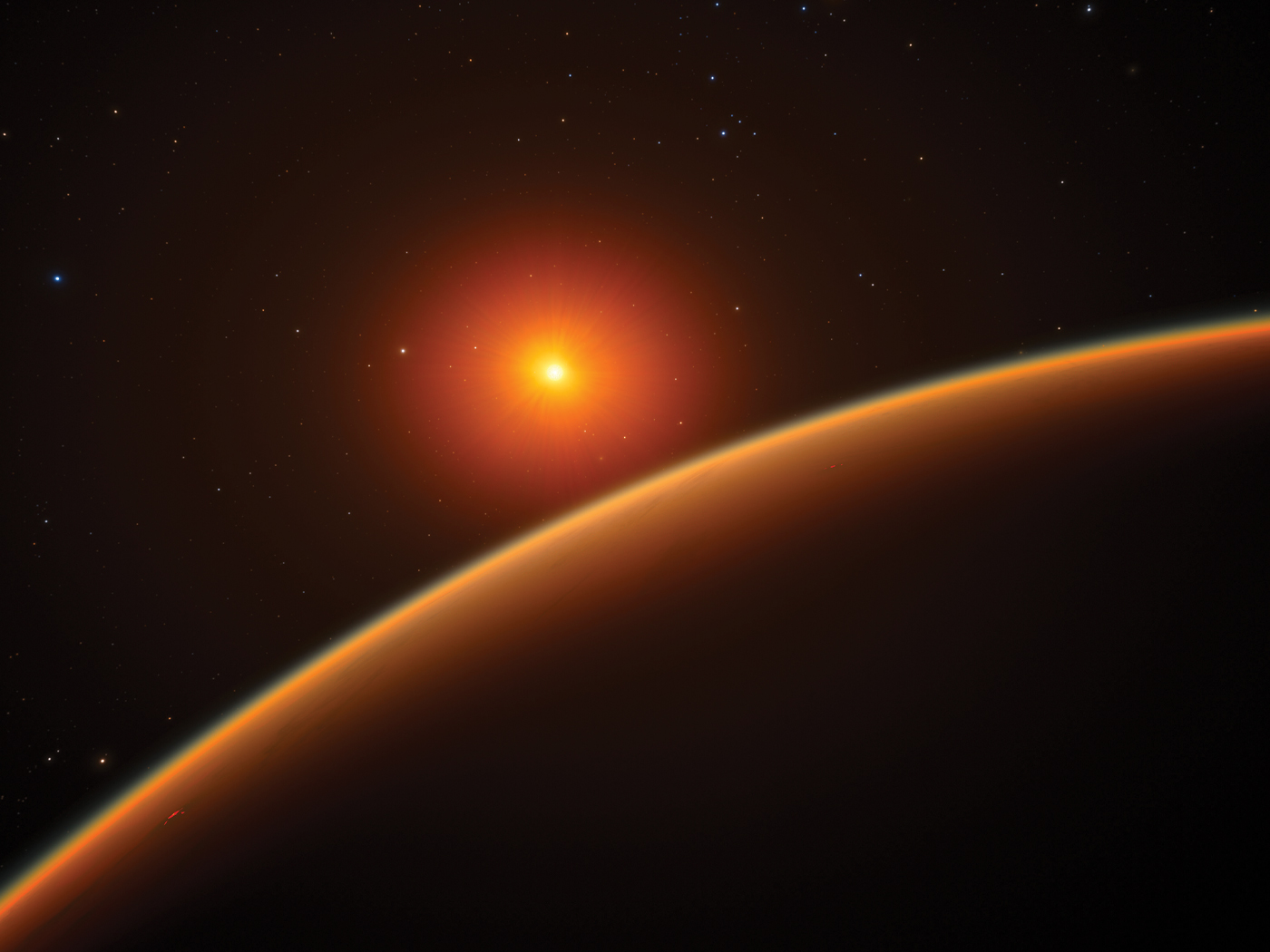
Helium in Exoplanet's Atmosphere: Apparent Evidence of Youth
The prestigious journal Science has published evidence that a planet orbiting a red dwarf star has an atmosphere.1,2 This extrasolar planet,...

CREATION PODCAST
Christian Geologist: I Studied Rocks for 13 Years - What I Found...
Geologist Dr. Tim Clarey spent 13 years digging into rock layers from every continent on Earth, and what he found doesn't match what most people were taught...
Giant Fossil Shark Consistent with Extreme Pre-Flood Longevity
Paleontologists recently rediscovered the largest known set of vertebrae from the giant fossil shark Otodus megalodon, popularized by The Meg movies...
Shop Related Products