“And David spake unto the Lord the words of this song in the day that the Lord had delivered him out of the hand of all his enemies, and out of the hand of Saul.” (2 Samuel 22:1)
This is the first verse of a remarkable poem inserted here near the end of 2 Samuel. With certain significant exceptions, it is the same as the 18th Psalm. David wrote many wonderful psalms, but this is the only one also found in the historical books and so must have special significance. In view of 2 Samuel 23:1-2 (“these be the last words of David”), it may even be David’s last psalm, as slightly modified by him from Psalm 18, just before his death.
In 2 Samuel 22:2-3, he ascribed nine wonderful names to God: rock, fortress, deliverer, God of my rock, shield, horn of my salvation, high tower, refuge, Savior. In the midst of this unique list of metaphors appears his statement of faith: “In him will I trust.” Although this psalm flows from David’s personal experiences, these words are quoted in Hebrews 2:13 as coming from the lips of Christ in His human incarnation. Thus, the song is actually also a Messianic psalm. Its testimonies go far beyond the experiences of David, reflecting the mighty events of Christ in creation, at the judgment of the great Flood, and His work as our Redeemer. It is significant that the concluding name in David’s list is Savior, which is the Hebrew yasha—essentially the same as “Jesus.”
Two of the names (Hebrew cela and tsur) are translated “rock,” but refer to different kinds of rock. They are the same words used for the rocks from which God provided water for His people in the wilderness (Exodus 17:6; Numbers 20:11), except that the order is reversed. One is the great rock of provision, the other the smitten rock of judgment. Our God of creation, Jesus Christ, is our daily sustenance but first must also be our sin-bearing Savior. HMM
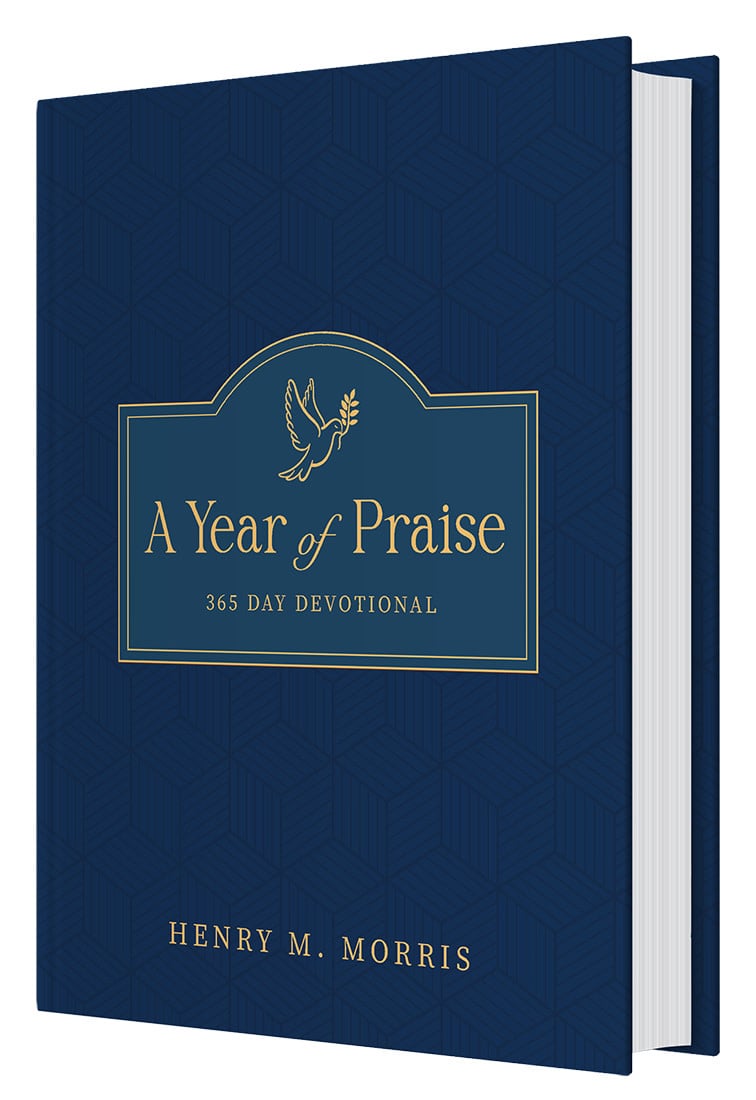
 Days of Praise Podcast is a podcast based on the Institute for Creation Research quarterly print devotional, Days of Praise. Start your day with devotional readings written by Dr. Henry Morris, Dr. Henry Morris III, and Dr. John Morris to strengthen and encourage you in your Christian faith.