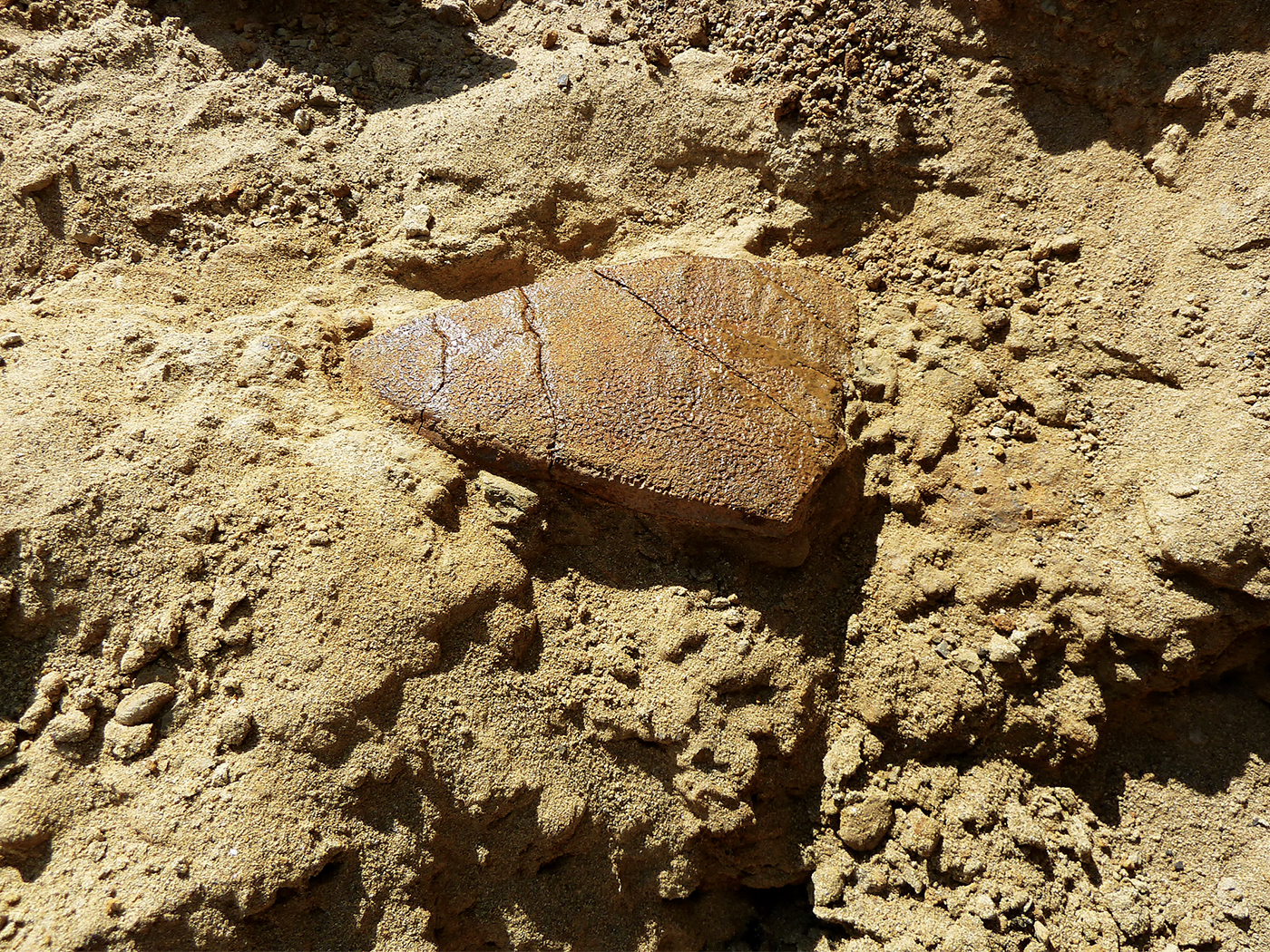
The world’s best-preserved nodosaur stirred wide interest when it went on display at the Royal Tyrell Museum in Canada in May 2017. Its skin scales, fearsome shoulder spikes, and possibly even skin colors prompted fossil pigment expert Jakob Vinther to tell National Geographic that it “might have been walking around a couple of weeks ago. I’ve never seen anything like this.”1 New details published in Current Biology back up that statement.2
Apparently, this specimen is different enough from other nodosaurs to warrant its own genus and species name: Borealopelta markmitchelli. It had secondary organic molecular structures called kerogen that form when primary proteins break down and mix underground.
In a May 12 interview, Issues, Etc. radio host Todd Wilken asked me about this fossil, “So it’s very possible here that we’re not looking at a fossil, strictly speaking—not a stone cast of what was once there as living matter—but a mummified specimen of a dinosaur?” I replied, “It’s possible, but there haven’t been any technical reports out yet.”3
Well, now a technical report is out, and it shows not quite as pristine a preservation as an Egyptian mummy, but it reveals nodosaur skin scales with kerogen’s energy-packed chemical bonds still intact.4 Though lab studies have not yet measured the expected shelf life for kerogen, this specimen still contains organic chemistry fragile enough to challenge the fossil’s vast age assignments. Microbes feed on kerogens, but even with no microbes in sight, kerogens still have plenty of potential chemical energy that inevitably reacts with other chemicals in an incessant chemical breakdown. Though they may be tough, kerogens cannot last forever—and should not last anywhere close to the 112 to 125 million years assigned to this fossil.
The detailed report of B. markmitchelli also clearly revealed original, unaltered pigments. These biomolecules resist the ravages of time and temperature better than proteins, but their mere existence still offers a solid argument for recent deposition, just as kerogen does.
The Current Biology team found the pigments melanin and pheomelanin in the B. markmitchelli skin. Only a decade ago, secular thinkers openly resisted original melanin discoveries in fossils like bird feathers and animal skins on the basis of their expectation that biochemicals like these decay after only thousands of years.5 While science still has not found a way pigments could last millions of years, melanin fossil finds like this one keep piling up.6
Until some new study shows why the laws of chemical decay should not apply to them, intact proteins and original pigments in fossils confront evolutionary time. This nodosaur’s intact biochemistry shows that it may have been walking around not long ago after all.
References
- Greshko, M. The Amazing Dinosaur Found (Accidentally) by Miners in Canada. National Geographic. Posted on nationalgeographic.com June 17, 2016, accessed May 12, 2017.
- Brown, C. M. et al. 2017. An Exceptionally Preserved Three-Dimensional Armored Dinosaur Reveals Insights into Coloration and Cretaceous Predator-Prey Dynamics. Current Biology. 27: 1-8.
- Thomas, B. The Discovery of an Intact Dinosaur Fossil. Issues, Etc. #1321. Aired May 12, 2017, accessed August 4, 2017.
- In particular, pyrolysis-gas chromatography-mass spectrometry (py-GC-MS) revealed “nitrogen-, oxygen-, and sulfur-containing heterocyclic and aromatic molecules” (Ref. 2). It also showed abundant alkenes, which have chemically reactive double bonds.
- Fossil feathers reveal their hues. BBC News. Posted on bbc.co.uk July 8, 2008, accessed August 4, 2017.
- Peruse other examples at Original Biochemistry Shows That Fossils Are Recent. Posted on ICR.org, accessed August 4, 2017.
*Mr. Thomas is Science Writer at the Institute for Creation Research and earned his M.S. in biotechnology from Stephen F. Austin State University.
Article posted on August 28, 2017.