



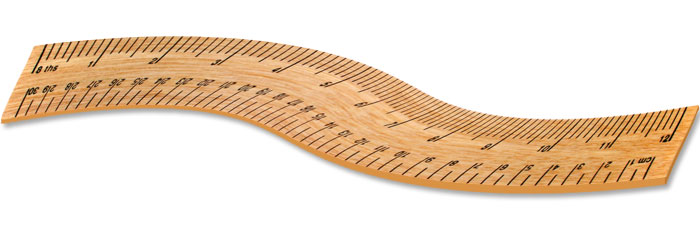
Darwinism's Rubber Ruler
A key element of the scientific method is the ability to test whether a hypothesis is true or false. A theory that can neither be confirmed nor falsified cannot be considered "scientific," and there's just no falsifying Darwin's strange idea that all creatures originated through descent with modification (macroevolution).
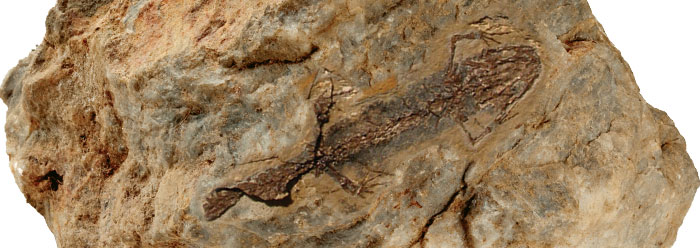
Fresh Tissues from Solid Rock
Fresh tissues continue to be found in supposedly millions-of-years-old fossils. These un-replaced, un-mineralized, still-soft tissues come from animals or plants that were preserved by some catastrophic event.1 Each specimen looks young, and a direct inference is that its host rock must also be dated as thousands, not millions, of years old.
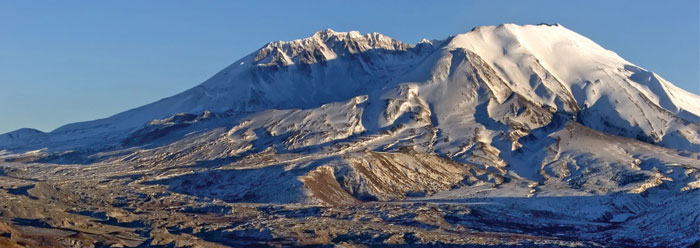
Lessons from Mount St. Helens
Readers of Acts & Facts know of ICR's long-standing research interest in Mount St. Helens, the volcano in Washington state that erupted on May 18, 1980. Attendees of many ICR seminars have likewise been introduced to the fascinating lessons learned there.

Why Do Animals Play?
A 19th-century poet spoke of "nature red in tooth and claw,"1 and the sometimes gruesome deaths that became integral to the concept of Darwinian evolution certainly occur. But sometimes animals play. If nature is inexorably locked in a battle for the survival of the fittest, where did frolicking come from?
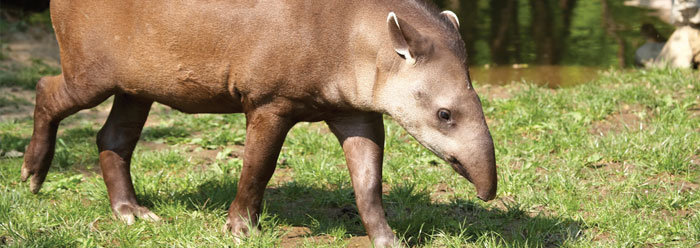
Tapir Testimony to Creation
One odd-looking member of God's creation is the tapir. Its most distinctive feature is a highly flexible proboscis (trunk) that is able to move in all directions. Generally, tapirs stand about three feet high at the shoulder, are about seven feet long, and weigh anywhere from 330 to 700 pounds. Their short fur coats range in color from grayish-black to reddish-brown.
Pages
