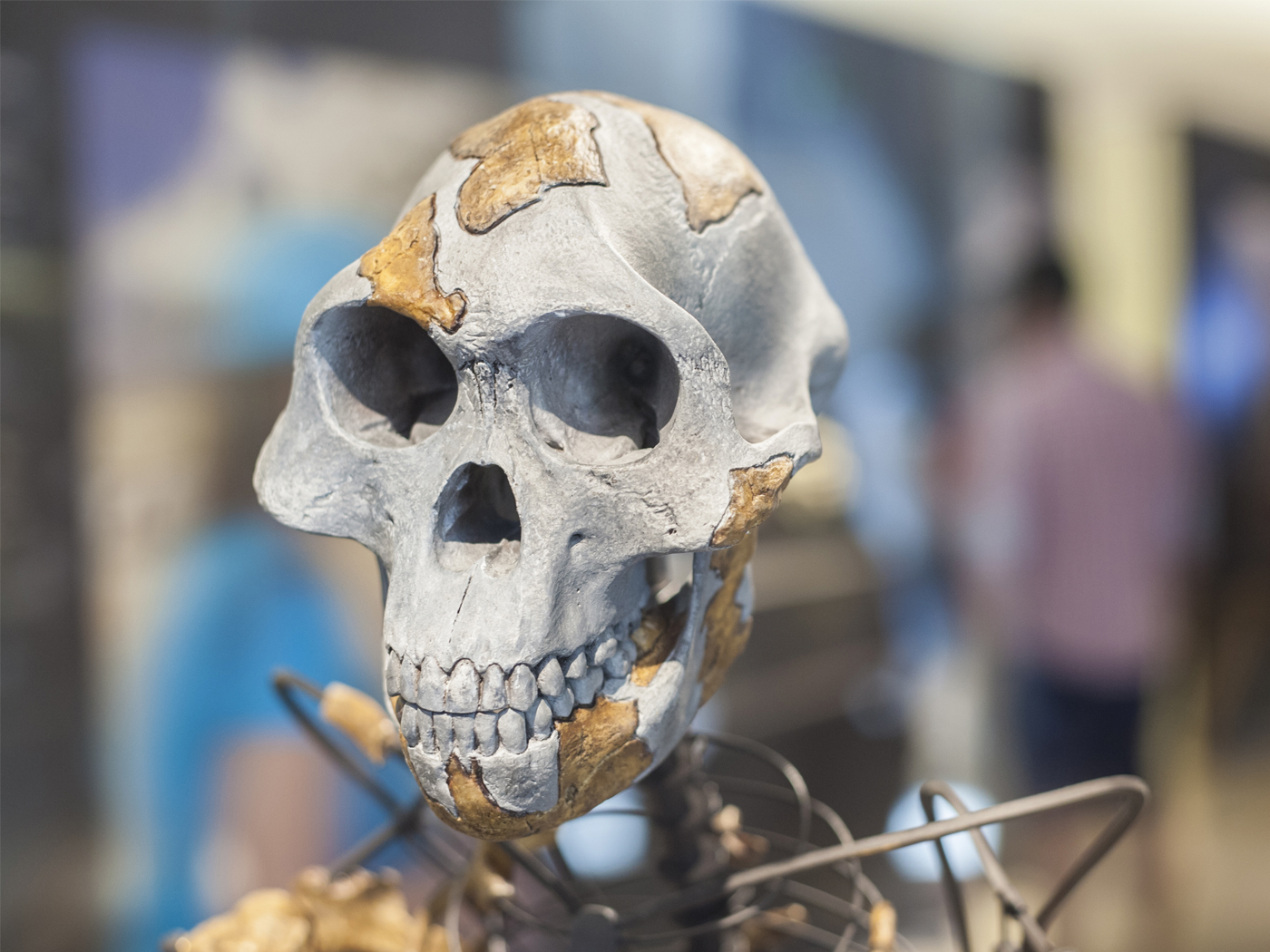
How does it make you feel when you put forth just as much effort as the next guy, but he receives twice the reward? Unfair! But how did people acquire the sensibilities involved when assessing fairness? Certain animals recognize unequal rewards too, prompting researchers to try and unravel the origins of fairness.
Publishing in Science, Sarah Brosnan from Georgia State University and Frans de Waal of Emery University reviewed studies on fairness in animals.1 Their review unwittingly exposed reasons why those who cling to a bias of naturalism may never discover the real roots of fairness.2
They wrote, "The human sense of fairness is an evolutionary puzzle. To study this, we can look to other species."1 But shouldn't good science begin solving a human puzzle by investigating humans—the very subject at hand?
Right off the bat, the naturalistic doctrine of man having evolved from primates has steered these researchers off course. They study apes' senses of fairness simply because they believe man evolved from apes. This is like studying an abacus to unravel the origins of smart phones simply because one believes the former evolved into the latter. In fact, each device was independently constructed, like apes and men were.
The researchers' bias manifested itself throughout the report in just-so statements like, "The pressure for increased cooperation combined with advanced cognitive abilities and emotional control allowed humans to evolve a complete sense of fairness."1 What experiments demonstrate this? None—it is merely a historical assertion, which by definition science cannot even directly investigate or observe.
The study authors then proposed that fairness evolved in order to supply certain benefits to organisms, like warning them of the dangers of cooperation, or enabling them to enjoy the fruits of sustained cooperation. In one experiment, caged chimpanzees receive food rewards when they cooperate fairly. However, these benefits do not explain the origin of fairness any more than the benefits of driving a car explain the origin of cars.
The mere possibility of benefit never supplies a mechanism to access that benefit. Real people invented cars to access the benefit of faster transportation, but they were able to think ahead, imagine, plan and execute. Nature does none of these things. Why not simply infer that a personal Creator invented a sense of fairness and placed that innate sense into certain animals and man?3
After all, the researchers found good evidence for creation in the fact that only certain birds or some monkeys or select apes recognize fairness, but other members of their respective groups do not. If fairness really evolved, then why didn't all members of a related group inherit it instead of just some?4
And by what means was nature supposed to have installed this sense? The study authors wrote, "Natural selection works on every individual's relative advantage compared with others," then they explained how nature might have selected those individual primates which were able to "compare one's gains with those of others."1 But this rhetoric defies reason.
For example, it still doesn't answer the question: Did the ability to compare gains just magically appear in those individuals that nature supposedly selected? Also, it assumes that natural selection—which could only select physical entities, namely whole individual organisms—somehow selected the non-physical attribute of fairness.
Plus, often monkeys with and without a sense of fairness live in similar environments today, indicating they bear similar selective pressures. Proponents of selection as the creative cause of fairness need to explain why similar environmental stresses would—or how they know outside factors were different enough to—produce fairness in one kind of monkey but none in a neighboring kind. From the creation perspective, God could have made some animals with certain senses, like fairness or for that matter electroreception, and others without it, just to display His creativity.
Naturalism's off-track circular reasoning and leaps of logic give its adherents an unfair disadvantage when they try to unravel the origins of fairness, which we can attribute to God's creative decision-making.
References
- Brosnan, S.F., and de Waal, F.B.M. Evolution of responses to (un)fairness. Science. 346 (6207). Published online before print, October 17, 2014, accessed October 21, 2014.
- Naturalism is the philosophy that nature alone explains everything, thus defining a reality with no supernatural elements allowed.
- The terms "fair" and "just" should be distinguished, with fairness comparing two similar objects or situations, and justice comparing a moral act or thought with God's objective moral law. Romans 2:15 notes that man has a conscience that notifies him when an act or thought misaligns with that which is right. See Budziszewski, J. 2011. What We Can't Not Know. Spence Publishing Company: Dallas, TX. Scripture does not indicate that animals have a conscience or the sense of justice to which a conscience refers, but appears to leave open the possibility of them having a sense of fairness.
- Thomas, B. 2013. The Unpredictable Pattern of Bioluminescence. Acts & Facts. 42 (4): 17.
* Mr. Thomas is Science Writer at the Institute for Creation Research.
Article posted on November 5, 2014.