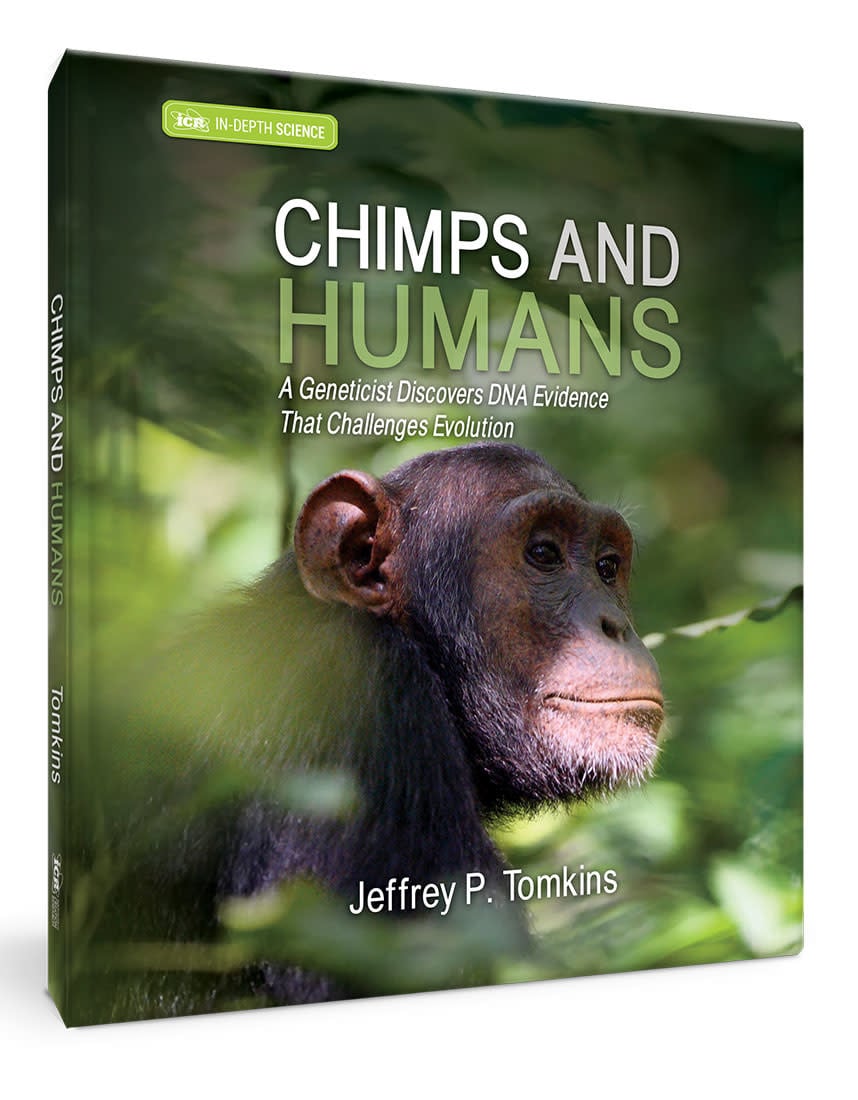
Two reports in the Journal of Creation (JOC) provide a current review and refutation of the “nearly identical” human-chimpanzee DNA similarity paradigm.1,2 Creation biologist Dr. Jerry Bergman and I authored these papers after the Answers Research Journal (ARJ) published results from the ICR research project detailing large-scale genome-wide DNA alignments between human and chimpanzee.3 Additionally, several ARJ papers published earlier in 2011 describe how the chimpanzee genome was sequenced and assembled—another important aspect of the DNA similarity paradigm.4,5 This significant group of research papers represents a fairly thorough refutation of the claim that humans and chimpanzees have nearly identical genomes and marks an important phase in ICR’s research program in the biological sciences.
The first of the recent JOC papers reviews secular science literature associated with the common claim that chimpanzees and humans are nearly identical. This analysis took the published secular claims at face value and showed that many differences exist in regard to not only genomic DNA, but also to gene regulation, regulatory DNA features, microRNA code, and gene splicing. Multiple types of DNA sequence and genetic mechanisms reported in the standard scientific literature clearly show that major genetic differences exist between humans and chimps—features clearly predicted by the creation model outlined in the book of Genesis.
The second paper examines the research methods and discarded data reported in an assortment of key secular human-chimp DNA research publications. All analyzed cases of reported high human-chimp DNA sequence similarity are based on biased data selection and exclusion techniques. DNA sequence data that are too dissimilar to be conveniently aligned are omitted, masked, or completely excluded. Furthermore, gap data within DNA sequence alignments are typically omitted, further biasing similarity estimates.
These highly selective data-discarding techniques, fueled by Darwinian dogma, lead to the commonly claimed 98 percent similarity in DNA between human and chimp. Based on the reanalysis of DNA similarity estimates using discarded data in leading secular research publications, it is safe to conclude that genome-wide DNA similarity between human and chimpanzee is not more than 81 to 87 percent identical. These numbers are in good agreement with the range of estimates obtained by ICR’s independent research.3
One must keep in mind that the chimpanzee genome is larger than the human genome by at least 8 percent (based on current data). Also, many non-similar regions of DNA between the human and chimpanzee genomes cannot be accurately compared due to high levels of dissimilarity. Therefore, overall genome similarity between human and chimpanzee is most likely lower than 81 percent.
References
- Bergman, J. and J. Tomkins. 2012. Is the Human Genome Nearly Identical to Chimpanzee? A Reassessment of the Literature. Journal of Creation. 26(1): 54-60.
- Tomkins, J. and J. Bergman. 2012. Genomic monkey business—estimates of nearly identical human-chimp DNA similarity re-evaluated using omitted data. Journal of Creation. 26(1): 94-100.
- Tomkins, J. 2011. Genome-Wide DNA Alignment Similarity (Identity) for 40,000 Chimpanzee DNA Sequences Queried against the Human Genome is 86-89%. Answers Research Journal. 4: 233-241.
- Tomkins, J. 2011. How Genomes Are Sequenced and Why It Matters. Answers Research Journal. 4: 81-88.
- Tomkins, J. 2011. Response to Comments on “How Genomes are Sequenced and Why it Matters: Implications for Studies in Comparative Genomics of Humans and Chimpanzees.” Answers Research Journal. 4: 161-162.
* Dr. Tomkins is Research Associate at the Institute for Creation Research and received his Ph.D. in Genetics from Clemson University.
Cite this article: Tomkins, J. 2012. Journal Reports Bias in Human-Chimp Studies. Acts & Facts. 41 (6): 6.