Longtime Acts & Facts readers will be aware of the Institute for Creation Research's fight for academic freedom in the state of Texas. As prior issues have noted,1 in April 2008 the Texas Higher Education Coordinating Board (THECB) banned the ICR Graduate School (ICRGS) from offering its Master of Science degree in Texas.
In response, ICR filed cases in 2009 to pursue both federal and state law remedies.2 At this point, there are two parallel court proceedings on track for court trials. One is a federal civil rights lawsuit pending in the Western District of Texas, Austin Division. Focusing on government-sponsored "viewpoint discrimination," the suit is currently scheduled for trial in July.
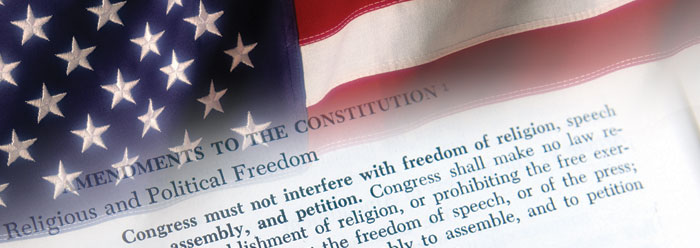
Of course, First Amendment freedoms loom large in this federal civil rights case. Ironically, this case was "removed" from state court (i.e., Travis County District Court), where it was originally filed. It was necessary for that lawsuit to start in Travis County, in order to trigger application of the Texas Religious Freedom Restoration Act of 1999, an important Texas law in this controversy. That law provides that if a form of Texas governmental discrimination is based on improper interference with religious liberty, the interference can be remedied by a trial judge, similar to how judges use injunctions to order solutions to other forms of state discrimination (e.g., illegal discrimination based on race, sex, national origin, etc.).
Since the ICRGS Master of Science program (offered in and from California since 1981) focuses on science education rather than "religion," one may ask--why is the Texas Religious Freedom Restoration Act relevant to a lawsuit that is mostly about interference with academic speech (i.e., governmental censorship of academic freedom and free speech as applied to a private school's academic curriculum)?
Although the answer is more complicated than this (due to technicalities of the applicable laws), one of the main issues is this: If the THECB's decision-making process, as shown by the relevant government records, shows that the government officials perceived that they were prohibiting a curriculum because of "religion" (as opposed to "science"), then the officials' conduct is viewed as government interference with religion.
In the federal case, ICRGS has asked for the judge to rule against all of the defendants: the state agency itself (THECB), its commissioner, and those THECB board members who voted to ban ICRGS's degree program from Texas.
The commissioner was deposed in April 2010, and at the time appeared to have difficulty recognizing that the medical MRI invention, used in modern hospitals, was an example of true medical science (perhaps because it illustrates how creationists do "real science").3 During the deposition--which lasted about six hours--the commissioner repeatedly testified that he was not an expert in science and seemed unsure how "science" is defined, yet he nonetheless stuck with his conclusion that ICRGS's science education curriculum (which focuses on geology, biology, and astro/geophysics) was based on "religion," not "science."
The other case, an administrative appeal, is scheduled for trial in late August before an administrative law judge in the Texas State Office of Administrative Hearings. This trial will focus on state law matters, not the THECB's constitutional law violations.
Of course, lawsuits have many "moving parts," so what occurs after this article goes to press cannot be predicted. ICR encourages your prayers that God will be honored,4 justice will be applied, and academic freedom will be safeguarded in and through these upcoming trials.
References
- Morris III, H. 2008. Where Has Academic Freedom Gone in Texas? Acts & Facts. 37 (6): 9; Johnson, J. J. S. 2009. Censorship in Texas: Fighting Academic and Religious Discrimination. Acts & Facts. 38 (5): 18.
- An administrative appeal petition was previously filed in May 2008.
- General Electric Co. v. Fonar Corp. and Damadian, 522 U.S. 908, 118 S.Ct. 266 (1997), denying certiorari to Fonar Corp. and Damadian v. General Electric Co., 107 F.3d 1543, 41 U.S.P.Q.2d 1801 (1997) (reversing JNOV and reinstating a jury verdict of $35,000,000.00 for GE's infringement of inventor Dr. Raymond V. Damadian's medical MRI invention patent).
- 1 Corinthians 10:31.
* Dr. Johnson is Special Counsel for the Institute for Creation Research.
Cite this article: Johnson, J. J. S. 2010. Our Day in Court. Acts & Facts. 39 (6): 22.