That species undergo change in this grand system called earth is apparent, but those changes do not occur the way Charles Darwin envisioned. Living things do shift behaviors and physiologies in response to environmental (and other) pressures, but can these minor changes completely rework a creature's essential form (a concept referred to as "macroevolution")? Decades of research emphatically say no.
Often, small changes within a kind are referred to as "microevolution," which has been defined as "evolution resulting from a succession of relatively small genetic variations that often cause the formation of new subspecies."1 Creation scientists agree that small variations occur, both because they can be observed, and because it is reasonable that a wise Creator would equip His creatures with survival-enhancing capabilities. But these variations do not lead to large-scale changes between kinds. Indeed, "there is no agreement [among evolutionists] as to whether macroevolution results from the accumulation of small changes due to microevolution, or whether macroevolution is uncoupled from microevolution."2
The confusing array of definitions for the word "species" can obscure deficiencies in Darwinian evolution. As leading scientists have admitted, "The very term 'species' is deeply ambiguous."3 Harvard's Steven Palumbi said in 1994 that "the formation of species has long represented one of the most central, yet also one of the most elusive, subjects in evolutionary biology."4
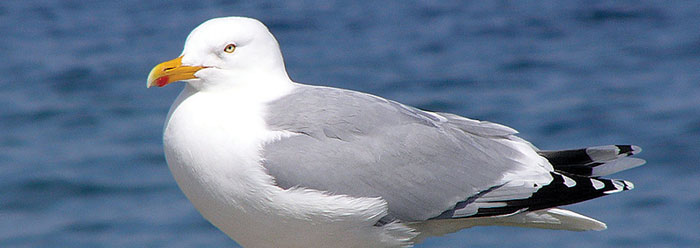
If different species are described as essentially those forms which cannot interbreed, then new species do arise, a process called "speciation." They do so, however, because of a loss of information--the opposite direction to what Darwinian evolution requires. For example, "the 'herring gulls,' as you move around the globe, become…more like lesser black-backed gulls."5 They interbreed in a continuum, until the ends of the ring meet in Europe, where these two species no longer interbreed. These changes are presented as evidence for evolution, but really only represent variety within the gull kind. And "it is by no means certain that this type of gradual process can lead to the origin of a fundamentally different species."6
In his Pulitzer Prize-winning novel The Beak of the Finch: A Story of Evolution in Our Time, evolutionist Jonathan Weiner actually validated the creationist position of variation within kind by admitting that the supposedly different members of "new species" of finches on the Galapagos Islands could occasionally interbreed.7 Creatures that can no longer interbreed with certain others of their kind are just dead-end varieties without some of the potentials of their more genetically enriched forebears.
And fruit flies remain clearly distinguishable as fruit flies, even after almost a century of mutation-inducing experiments. There is no evidence that new genetic material--other than newly-damaged material--is produced. Pre-existing genes can be shuffled, marred, or lost, but never invented by nature.
Instead of using the term "species," which has genetic, morphological, ecological, and evolutionary definitions, employing the concept of Genesis 1 "kinds" can clarify matters. These true-to-form kinds do not match well with conventional species because they are most often able to interbreed at the family or subfamily levels of conventional taxonomy.8 For example, domestic cats breed with some wild cats, and there is evidence that perhaps all of today's cat varieties--most of which are in the subfamily felinae--descended from original representatives of the cat "kind."
Despite the smokescreen that conflicting definitions can create, there remains no evidence that basic kinds can morph from one to another. Once again, real science and Scripture concur: "All flesh is not the same flesh: but there is one kind of flesh of men, another flesh of beasts, another of fishes, and another of birds" (1 Corinthians 15:39).
References
- Leonard, B. Critical Analysis of Evolution -- Grade 10. Draft Reflecting Changes Made at March 2004 State Board of Education Meeting, page 314. Ohio Department of Education. Available online at www.texscience.org.
- Allaby, M. (ed.) 2020. The Concise Oxford Dictionary of Zoology. 5th edition. New York: Oxford University Press. 350.
- Agapow, P. et al. 2004. The Impact of Species Concept on Biodiversity Studies. The Quarterly Review of Biology. 79 (2): 162.
- Palumbi, S. R. 1994 Genetic Divergence, Reproductive Isolation, and Marine Speciation. Annual Review of Ecology and Systematics. 25: 547-572.
- Dawkins, R. 2004. The Ancestor's Tale. New York: Houghton Mifflin, 303.
- Palmer, T. 1999. Controversy: Catastrophism and Evolution. New York: Kluwer Academic, 121.
- Weiner, J. 1994. The Beak of the Finch: A Story of Evolution in Our Time. New York: Knopf. See also Grant, P. R. et al. 2003. Inbreeding and Interbreeding in Darwin's Finches. Evolution. 57 (12): 2911-6.
- Wood, T. C. 2006. The Current Status of Baraminology. Creation Research Society Quarterly. 43 (3): 149-158.
* Mr. Sherwin is Senior Science Lecturer and Mr. Thomas is Science Writer.
Cite this article: Sherwin, F. and B. Thomas. 2009. Do "New Species" Demonstrate Darwinism? Acts & Facts. 38 (2): 36.