



A wide array of fish, amphibians, and arthropods have successfully colonized cave environments. In their cave adaptation, these creatures display complex systems of morphological, physiological, and behavioral traits that allow them to thrive in light-deficient and resource-scarce environments. One of the best-studied of these creatures is the Mexican tetra blind cavefish which is now revealing surprising and ingenious adaptive engineering that enables it to thrive in oxygen-depleted cave water.1
The tetra blind cavefish is found in at least 30 different underground cave systems in Mexico and one location in South Texas.2,3 The cavefish are nearly genetically identical to sighted surface variants that live in streams and lakes above the subterranean caves. Thus, scientists have claimed that the surface and blind cave variants (called morphs) are the same species (Astyanax mexicanus).
The cave morph displays a complete remodeling of its bodily development. This includes lack of eye development, complex enhancements for chemical and mechano-sensors, altered circadian cycles, modified neural and endocrine circuits, metabolic modifications in both metabolism and the rates at which calories are burned, and specific epigenetic modifications. While these adaptative enhancements help the fish to live in a dark and resource-scarce environment, little was known about how they dealt with the depleted oxygen levels common in cave water.
In this new study, researchers performed a detailed analysis of cavefish blood and compared it to surface fish. They found that cavefish populations display a higher concentration of hemoglobin in their blood which was correlated with an increase in erythrocyte (red blood cell) size. Both cave and surface variants had similar numbers of erythrocytes per unit of blood, but the elevated hemoglobin in the cave variants was not due to an overproduction of red blood cells, but an increase in blood cell size—allowing it to contain more hemoglobin.
In simple terms, an adaptive program built into the cavefish is supersizing the red blood cells so they can contain more hemoglobin to harvest and transport more oxygen. This response is based on sensors in the fish that detect and track available oxygen, then relay the information back into a system of internal logic that then modulates blood cell size and hemoglobin enhancement.
This new research clearly reveals an additional adaptive system in Astyanax cavefish demonstrating that complex coordinated changes between cellular architecture and biochemistry are responsible for organisms transitioning to extreme environments. Evolution (mutation and selection) is a mystical notion that has no power to explain this amazing cavefish engineering that we are only just beginning to unravel. Truly, all glory goes to our amazing Creator the Lord Jesus Christ, whose omnipotent power and eternal wisdom engineered these systems.
References
1. Boggs, T.E., J.S. Friedman, J.B. Gross. 2022. Alterations To Cavefish Red Blood Cells Provide Evidence Of Adaptation To Reduced Subterranean Oxygen. Scientific Reports. DOI: 10.1038/s41598-022-07619-0.
2. Maldonado, E., et al. 2020. Subterranean Life: Behavior, Metabolic, And Some Other Adaptations Of Astyanax Cavefish. Journal Experimental Zoology B. 334 (7-8): 463-473.
3. McGaugh, S.E., et. al. 2020. Evidence For Rapid Phenotypic and Behavioural Shifts In A Recently Established Cavefish Population. Biological Journal of the Linnean Society. 129 (1): 143-161.
*Dr. Tomkins is Director of Research at the Institute for Creation Research and earned his doctorate in genetics from Clemson University.
Oxygen-Based Adaptive Engineering in Blind Cavefish
The Latest
The Lipstick Vine: Evidence of Designed Adaption
In their desire to validate the questionable case for evolution, conventional biologists will appeal to local adaptation, variation, and ecological...
Biblical Giants in the News
Recent claims that an Egyptian papyrus scroll may affirm the past existence of giants have gone viral,1,2 and news outlets still reported...

March 2026 ICR Wallpaper
"Behold, I will do a new thing, Now it shall spring forth; Shall you not know it? I will even make a road in the wilderness And rivers in the desert." (Isaiah...

Creation Kids: Ladybugs
Hi, kids! We created a special Acts & Facts just for you! Have fun doing the activities while learning about the wonderful world God...

North Cascades National Park: Assembled During the Flood and...
North Cascades National Park is sometimes called “the American Alps” for its stunning vistas that average about 5,000 feet above sea level,...

Engineered Genomic Changes in Adaptation
Programmed genome rearrangements (PGRs) are deliberate, genetically controlled changes in an organism’s DNA sequence and chromosome structure...

How Can I Know Evolution Is Wrong?
Evolution pushes Christians to doubt what our Bibles say about creation by asserting impersonal processes made everything over eons. Scripture asserts...

What Is a Charitable Gift Annuity?
A charitable gift annuity (CGA) is a simple, proven way to make a gift to ICR and receive fixed income for life—often at rates higher than CDs....
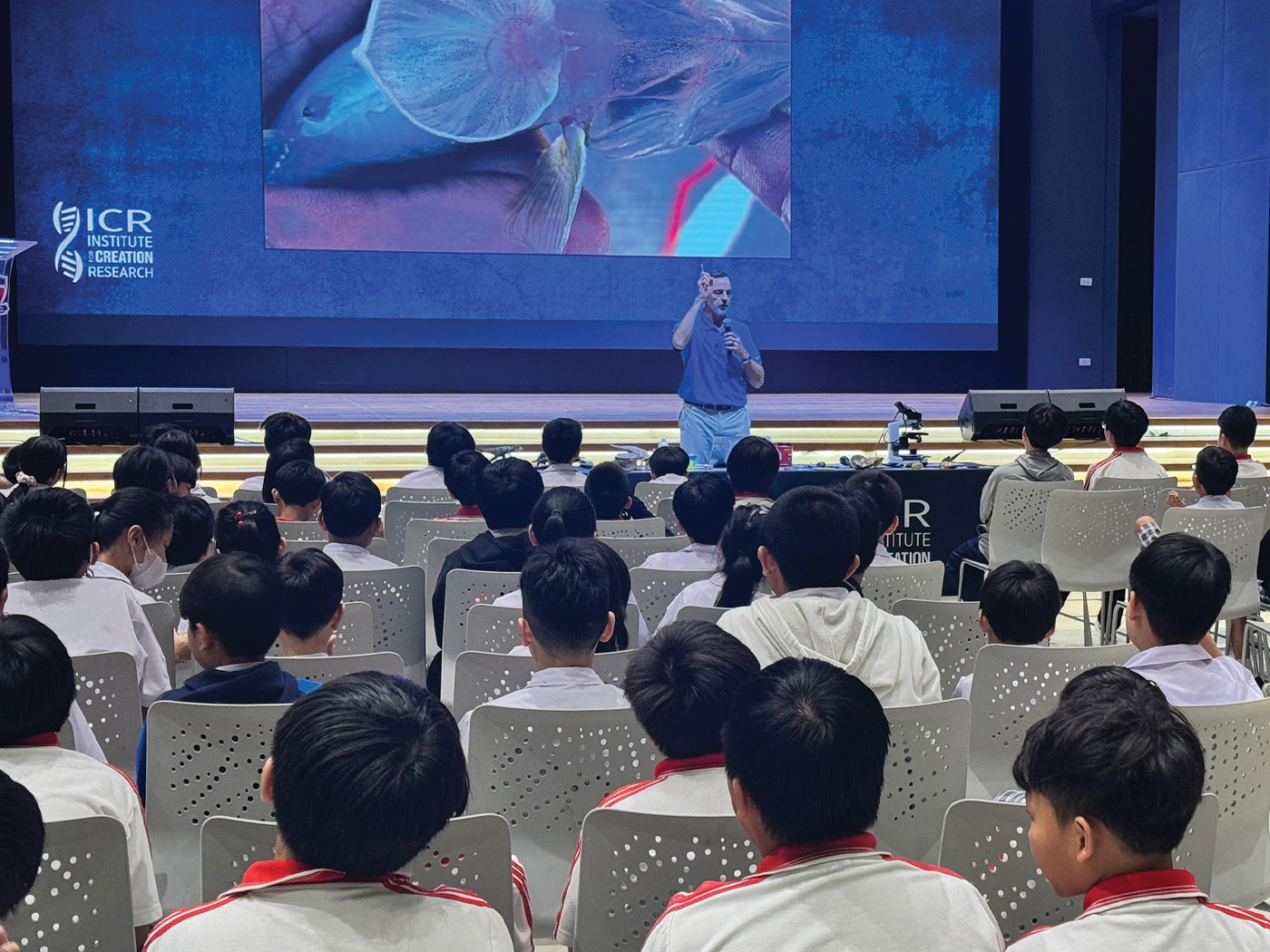
ICR in Thailand
As the unified body of Christ, we marvel when individual notes come together to form beautiful harmonic chords. Dino Dave and Dr. Brian were blessed...

Making a TOBD Easy: A Conversation That Says It All
“I get what you’re saying! And I would love to think about biology from a design perspective, but I don’t even know where to begin,”...