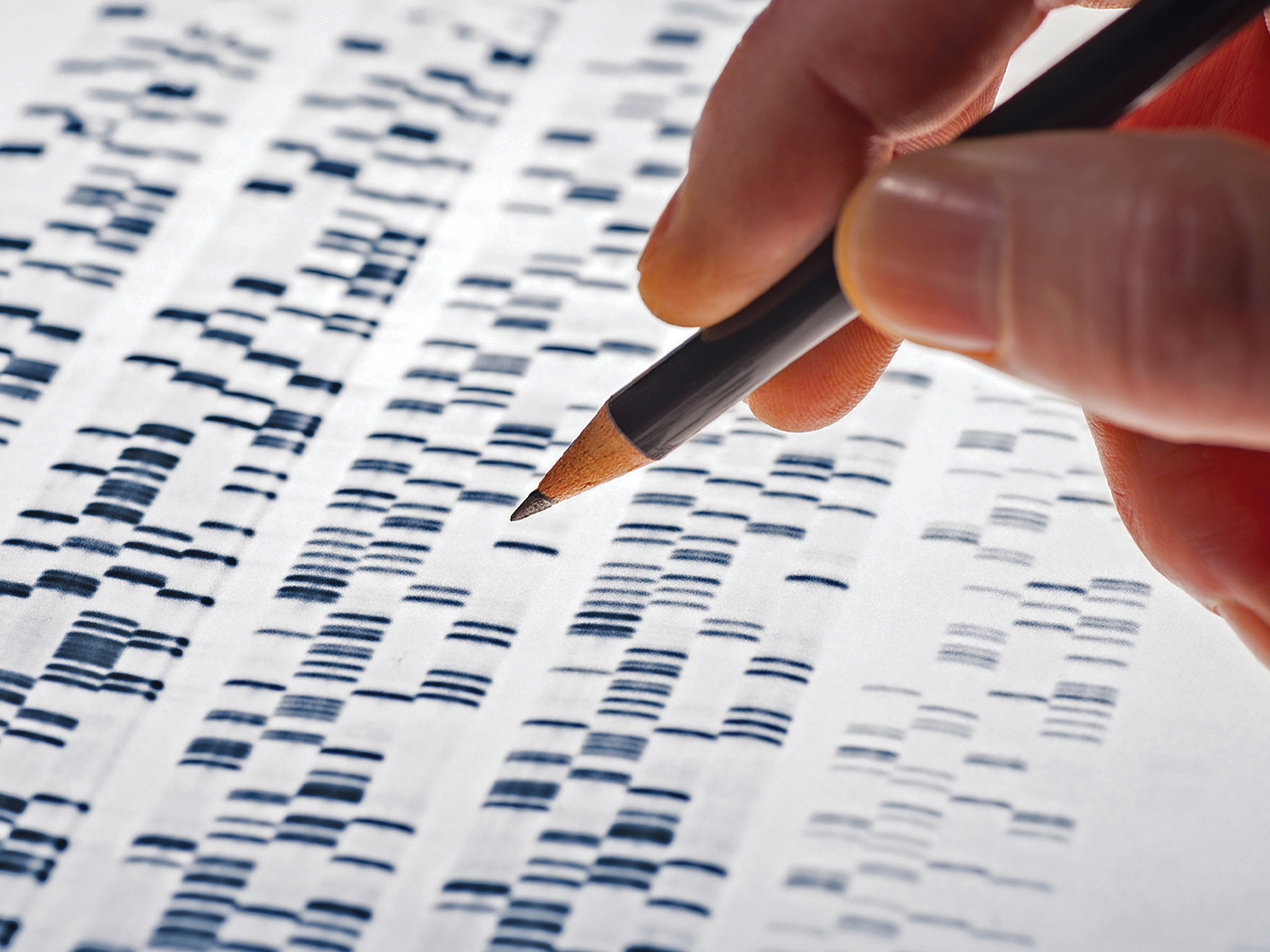
Two recent findings in biology add confirmation that biological functions are best characterized by engineering principles. This research describes a number of sophisticated internal clocks that control the timing of key events during embryological development. These clocks are part of systems that function just like a construction schedule used to guide decisions by human project managers.
ICR has been developing a theory of biological design (TOBD) that is a better scientific explanation for biological functions than selectionism.1 The theory is a working hypothesis of how the biological phenomena of growth, metabolism, reproduction, and adaptation function. One major premise is that biological functions are suitably explained by engineering principles. We expect to uncover elements in biological systems that correspond to human-designed systems performing similar functions. Thus far, our theory has guided the development of several organism-focused, design-based models. One model, called Continuous Environmental Tracking (CET), explains biological adaptation;2 another explains seed dormancy and germination in forest ecosystems;3 and a third model explains that the human immune system does more than just defend the body against disease—it has a much broader purpose of acting as an interface that regulates the relationship primarily between organisms and the microbial realm.4
Both embryological development and human-engineered building projects assemble materials into a final pre-determined product. It would seem, therefore, that a design-based framework to model embryological development could be readily created. It is true that intra-cellular information and DNA do, in many ways, correspond to the plans and specifications produced by human engineers.
But the construction schedule itself is another product generated by engineers that is of equal importance to the plans for completing a project. A theory of biological design expects that the biological equivalent of a construction schedule for embryological development exists in the genetic information of the first single cell. Fortunately, research is beginning to identify the parts of logic-based mechanisms in creatures that function as schedules.
Olivier Pourquié, professor of genetics in the Blavatnik Institute at Harvard Medical School has built on his pioneering discovery of a cellular “clock” in chicken embryos as reported by Harvard University.5 One area of his research focusses on how development in vertebrates is controlled. The spine is both a benchmark and foundational feature built very early in vertebrate embryos. Per the Harvard press release, Pourquié’s “clock” does in fact schedule the timing of spine development “where each ‘tick’ stimulates the formation of a structure called a somite that ultimately becomes a vertebra.” Pourquié confirmed that human development is also controlled by the same type of “clock” and said, “Our system should be a powerful one to study the underlying regulation of the segmentation clock.”
Research led by James Briscoe, a developmental biologist at the Francis Crick Institute in London, compiled information on multiple scheduling mechanisms. These were recounted in a Special Report by Knowable Magazine.6 Stressing the importance of these mechanisms within embryos, the report begins by saying, “If events weren’t properly timed, pandemonium would ensue. Researchers are ferreting out the internal clocks that control developmental sequence and scheduling.”
Briscoe’s research intends to discover “the timers that keep things trucking along at the right rate for any given organism, ensuring that it grows to the proper size and with all its parts in place.” Thus, an embryological construction schedule is expected to control the timing and rate of assembly just like a schedule used by human engineers. Knowable Magazine summed up Briscoe’s explanation as,
Similar to Pourquié’s research, Briscoe identified different types of clocks in different tissues which helped provide details on how they operated. They found elaborate innate systems that facilitate very different types of operation. Some clocks may either “count up,” “count down,” run through feedback loops resulting in “cyclical oscillations” or keep track of how many times they’ve divided. Knowable Magazine quotes developmental biologist Mubarak Hussain Syed of the University of New Mexico, who says “The cell might be counting, ‘OK, we have done 20 divisions, and now it’s time’ for the next step.”
What makes everything even more remarkable is that, unlike current human-engineered devices which are assembled by humans or robots, organisms self-assemble. A human construction manager is constantly making logical decisions to keep the project efficiently moving toward completion based on the specifications, schedule, and many changing conditions impacting the project.
But suppose that engineers wanted to build a device that could actually self-assemble. Obviously, the engineers must program into this device the specifications for all of its traits. But they must also program in an incredibly complicated set of logic-based responses that will imitate their conscious logical intentions as if they were “on site” to either direct assembly per the schedule or select between pre-programmed potential solutions to different challenges. The information content to implement control—including the timing of the assembly—could greatly exceed the information content for the traits. To substitute for the project engineers’ eyes and ears, a self-assembling device would also need a large array of internal and external sensors to send data to the internal logic-based controller.
As the schedules controlling embryonic development become clearer, we are closer to modeling development with the same engineering principles that control human construction projects. This model will be able to make predictions of future discoveries in developmental biology and could guide research. A fresh new benefit to our theory of biological design is its ability to generate these organism-focused, engineering-based models.
Innate control systems are essential to all dynamic entities, and they are a hallmark of sophisticated engineering. The only known originating source of this information is a real conscious mind. The myriads of phenomenally complex control and backup systems are evidence of the astounding creative genius of nature’s Creator, the Lord Jesus Christ.
References
1. Guliuzza, R. J. 2018. Engineered Adaptability: Adaptive Changes Are Purposeful, Not Random. Acts & Facts. 47 (6): 17-19.
2. Guliuzza, R. J. and P. B. Gaskill. 2018. Continuous environmental tracking: An engineering framework to understand adaptation and diversification. In Proceedings of the Eighth International Conference on Creationism, ed. J.H. Whitmore. Pittsburgh, Pennsylvania: Creation Science Fellowship, 158-184.
3. Hennigan, T. and R. Guliuzza. 2019. The Continuous Environmental Tracking hypothesis—application in seed dormancy and germination in forest ecosystems. Journal of Creation. 33(2): 77-83.
4. Guliuzza, R. J. and F. Sherwin. 2016. Design Analysis Suggests that our “Immune” System Is Better Understood as a Microbe Interface System. Creation Research Society Quarterly. 53(5):123-139.
5. Dutchen, S. 2020. Backbone of Success. Posted at Harvard.edu on January 8, 2020, accessed on February 4, 2020.
6. Brown, E. 2020. How does the embryo make all its parts at just the right moments? Posted on knowablemagazine.org on January 30, 2020, accessed on February 4, 2020.
*Randy Guliuzza is ICR’s National Representative. He earned his Doctor of Medicine from the University of Minnesota, his Master of Public Health from Harvard University, and served in the U.S. Air Force as 28th Bomb Wing Flight Surgeon and Chief of Aerospace Medicine. Dr. Guliuzza is also a registered Professional Engineer.