



A recent study making the news involves the reconstruction of the facial features and anatomy of the enigmatic humans known as the Denisovan from genetic data.1 In the evolutionist’s own words who did the study, “Denisovans are an extinct group of humans.” And the scientists’ research shows exactly that.
Denisovan fossils are represented by only a few teeth, a finger bone, a bit of a mandible (jawbone), and either a leg or an arm bone fragment. These isolated bits and pieces have been found in two locations. One was a Russian cave in the Siberian Altai Mountains close to the borders of Kazakhstan, China, and Mongolia. The other location was farther south in a cave on the Tibetan Plateau. From these teeth and bone fragments, DNA has been sequenced and compared to modern human groups.
Denisovan DNA is distinctly human and has been found to be most closely related to people groups across Asia, including Southeast Asian islands. Denisovan DNA, like Neanderthal DNA, is now considered to be nothing more than another variant of the human genome. In fact, evolutionists now widely acknowledge that anatomically modern humans, Neanderthals, and Denisovans interbred with each other.
While the Neanderthal people were known for having large brains, prominent brow ridges, and sloping foreheads (traits still found among modern humans),2 very little is known about what Denisovans looked like because of the limited amount of fossil material. Now, using a combination of epigenetics (chemical tags on the DNA) and genetics, scientists are attempting to reconstruct what a Denisovan might have looked like. And no surprise, the reconstruction looks fully human.1 The researchers claimed that the reconstructed female Denisovan had an elongated face and a wide pelvis, like Neanderthals, but also had a laterally wider head.
As is typical with evolutionists, they take information from a single individual and then make broad extrapolations to entire populations. The approach of taking DNA data and then inferring what someone looks like from epigenetic modifications still remains to be definitively proven as a valid methodology. However, one thing we do know for sure: This is just one more study showing that humans have always been humans.
References
1. Gokhman, D. et al. 2019. Reconstructing Denisovan Anatomy Using DNA Methylation Maps. Cell Press. 179 (1): 180-192.
2. Tomkins, J. P. 2019. Recent Humans with Archaic Features Upend Evolution. Acts & Facts. 48 (4): 15.
Dr. Tomkins is Life Sciences Director at ICR and earned his doctorate in genetics from Clemson University.
Denisovan Epigenetics Reveals Human Anatomy
The Latest
The Lipstick Vine: Evidence of Designed Adaption
In their desire to validate the questionable case for evolution, conventional biologists will appeal to local adaptation, variation, and ecological...
Biblical Giants in the News
Recent claims that an Egyptian papyrus scroll may affirm the past existence of giants have gone viral,1,2 and news outlets still reported...

March 2026 ICR Wallpaper
"Behold, I will do a new thing, Now it shall spring forth; Shall you not know it? I will even make a road in the wilderness And rivers in the desert." (Isaiah...

Creation Kids: Ladybugs
Hi, kids! We created a special Acts & Facts just for you! Have fun doing the activities while learning about the wonderful world God...

North Cascades National Park: Assembled During the Flood and...
North Cascades National Park is sometimes called “the American Alps” for its stunning vistas that average about 5,000 feet above sea level,...
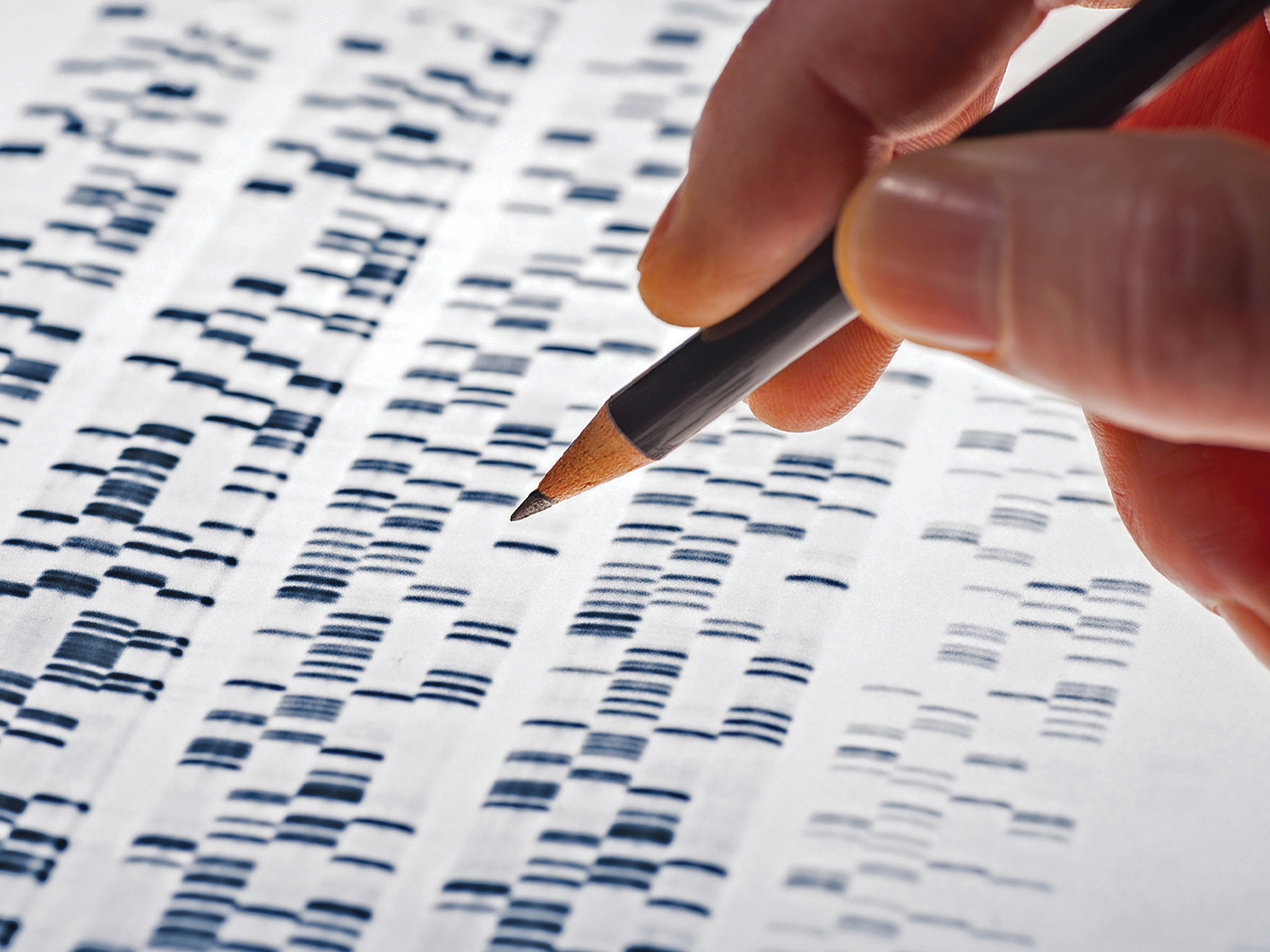
Engineered Genomic Changes in Adaptation
Programmed genome rearrangements (PGRs) are deliberate, genetically controlled changes in an organism’s DNA sequence and chromosome structure...

How Can I Know Evolution Is Wrong?
Evolution pushes Christians to doubt what our Bibles say about creation by asserting impersonal processes made everything over eons. Scripture asserts...

What Is a Charitable Gift Annuity?
A charitable gift annuity (CGA) is a simple, proven way to make a gift to ICR and receive fixed income for life—often at rates higher than CDs....
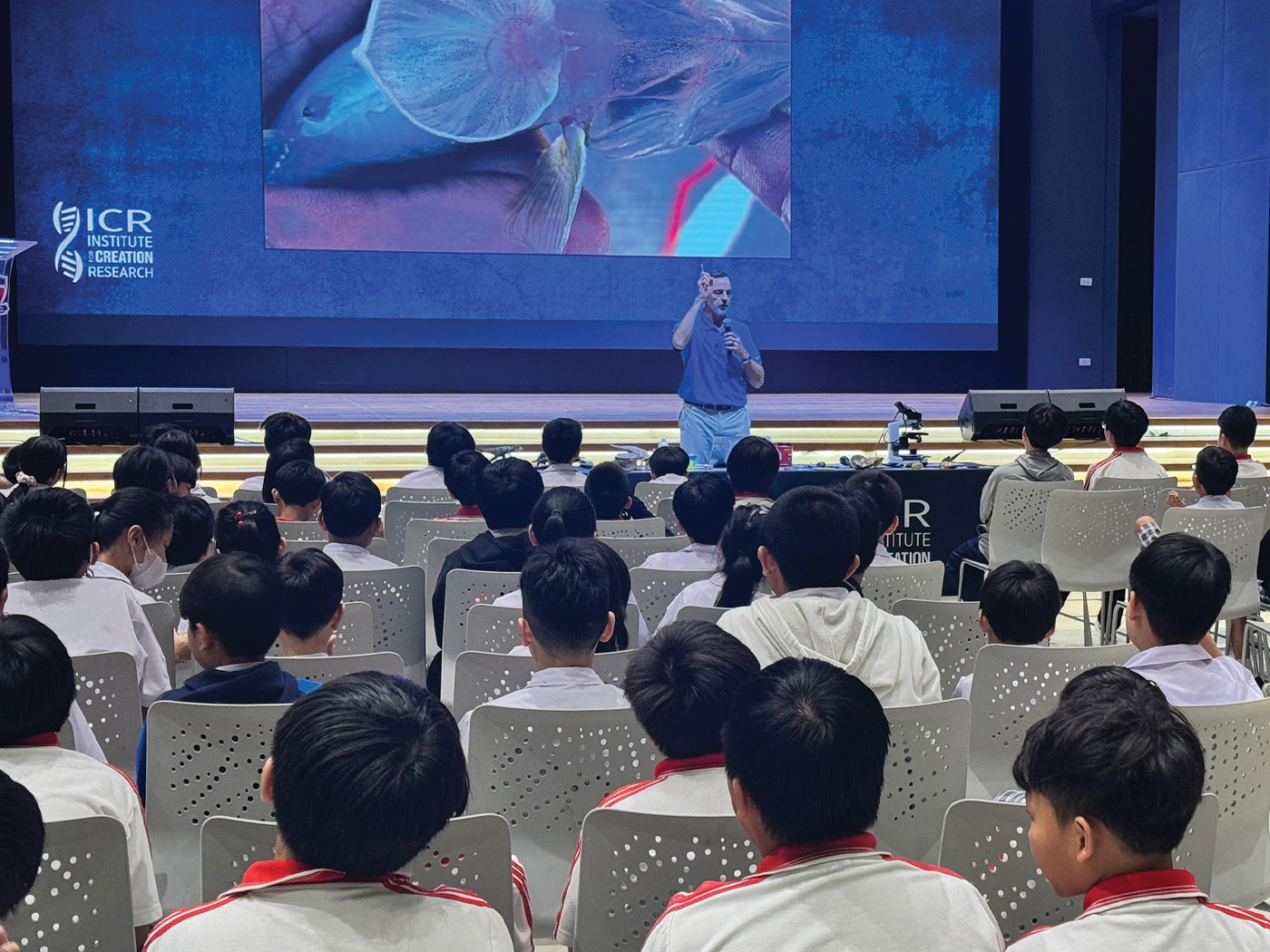
ICR in Thailand
As the unified body of Christ, we marvel when individual notes come together to form beautiful harmonic chords. Dino Dave and Dr. Brian were blessed...

Making a TOBD Easy: A Conversation That Says It All
“I get what you’re saying! And I would love to think about biology from a design perspective, but I don’t even know where to begin,”...