As a creationist geologist, I enjoy speculating about Noah's Flood and its geologic results. If such a flood took place, it would have laid down multiple layers of mud full of the remains of plants and animals which died in the Flood. These layers would be widespread (since the Flood was global) and give evidence of having been laid down rapidly.
While we can't be certain of the exact nature of the Flood, it certainly involved tsunamis (sometimes called tidal waves)—incredibly energetic shock waves in the ocean, traveling at the speed of sound, which pummeled the land with towering walls of water. Likewise, it involved underwater mudflows, which even today are known to flow at up to 100 miles per hour, following an underwater earthquake or other disturbance. Volcanism, tectonism, erosion, redeposition, etc., occurred at rates, scales, and intensities far beyond similar processes occurring today.
The Flood was not only an episode of judgment, it was also a time of God's grace and salvation. Noah and his family, and two representatives of each "kind" of land-dwelling, air-breathing animal (seven of each "clean" kind), were protected and preserved on board Noah's Ark. Outside, "all in whose nostrils was the breath of life, of all that was in the dry land, died" (Genesis 7:22).
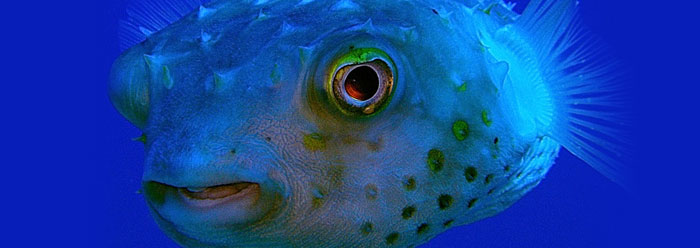
But what about the fish and other marine creatures? Obviously, they weren't taken on board the Ark. How could they survive, particularly both fresh and salt water forms? As a matter of fact, most of them didn't survive. Over 95 percent of all fossils are marine creatures. They died, and are fossilized, by the trillions. Many are buried in great fossil graveyards, tightly packed together, choked with sediments, buried before they had time to decay. Obviously, they didn't live in the environment in which they died. But how could any have survived?
In the complex of events and conditions that made up the Flood, certainly there were pockets of fresh and/or clean water at any one time. Remember, it was raining in torrents, and we can expect that the rain was fairly fresh water. Many studies have shown that waters of various temperatures, chemistries, and sediment loads do not tend to mix; they tend to remain segregated into zones. It would be unlikely for any one area to retain such zones for very long during the tumult of the Flood, but on a worldwide scale, some such segregated zones would have existed at any given time. Furthermore, we don't know the tolerance levels of pre-Flood fish for sediment, salt, and temperature. Modern fish have a great variety of responses to different environments. Perhaps before the Flood, fish were even more adaptable.
There is also the possibility that great amounts of vegetation were dislodged from the pre-Flood continents and remained intertwined during the Flood as floating mats. Many creationists feel that the decay and abrasion of these mats are responsible for our major coal seams, but underneath these mats, the turbulence of the surface would have been lessened. Perhaps many fish found shelter and nutrition under them, as insects may have, on the mats themselves.
Even though there is much we don't know about what went on during the Flood, we can see that there is at least a plausible answer that can be proposed to such questions.
* Dr. John Morris is the President of the Institute for Creation Research.
Cite this article: Morris, J. 1990. How Could Fish Survive Noah's Flood? Acts & Facts. 19 (7).