In the early 1800s, William Paley published a carefully argued paper entitled "Natural Theology," which developed a convincing case for the necessity of a Designer to produce the intricate design we see in living systems.
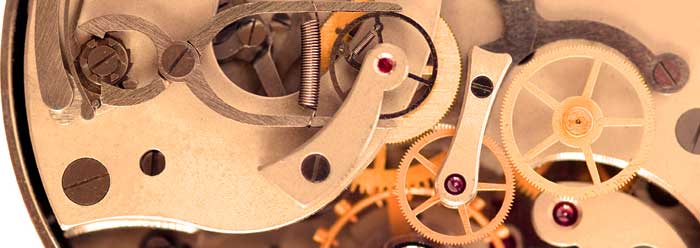
He referred to human machines such as a watch, claiming we would never conclude, upon discovery of a watch, that it was the result of natural processes such as wind and rain. By observing the order of the organism, the purpose of each part, and the interdependence of the parts, one would never conclude that it happened by chance.
This, I think, is a key Biblical argument for creation. In a strict sense, it is not a scientific argument, but it is an intuitive argument. In the debates in which I have participated, I always call attention to the design in living things. Perhaps the best example is a "simple," single-celled organism. Although the simplest of all organisms, such a protozoan is very complex, comprised of scores of functioning parts, each performing a specific function and all working together for the good of the whole. Remove any one of these functioning parts, and the whole organism dies. There are, by some estimates, tens of thousands of enzyme reactions occurring within each cell, all necessary right from the start. Of course, almost all of this information comes from the wondrous DNA code, the precise arrangement of genes which directs all growth and function. Furthermore, each gene, each organelle, each aspect of the cell is made up of complex protein molecules—specifically arranged chains of amino acids precisely placed for a particular purpose.
To propose that a living, replicating cell arose without design from non-living matter is easily the weakest point of evolution theory—so weak that many famous scientists, who have worked for years to find a plausible way it might have happened (like Nobel Prize-winning geneticist, Dr. Francis Crick), have concluded that life evolved somewhere out in space where conditions are different from those here on Earth, because it evidently could not happen here.
Today's evolutionists ignore Paley's argument for design in living systems, attributing such complexity to the workings of natural selection. They have traditionally argued that since living things and machines are of two inherently different categories, Paley's analogy is not valid. Thus they ignore the counter-intuitive nature of evolution. Strictly speaking, they are right! The analogy is not precise!
Things are changing today, however, for the more science digs into the structure of living systems, the more the "machine" analogy seems appropriate. When the workings of life were poorly known, science could rightly profess bewilderment, and claim that life is different. But now we can see something of how life works (not how it originated) and it bears rough resemblance to an intricate computer-driven machine, although far more complex. Experts feel that science has only begun to understand the machine-like workings of a cell.
The analogy has been validated. Life is something like an amazingly well-designed machine, but much more complex than those designed by humans. Such evidence of design speaks eloquently for a Designer, and those who choose to disbelieve are still "without excuse" (Romans 1:20).
* Dr. John Morris is the President of ICR.
Cite this article: Morris, J. 1990. Did a Watchmaker Make the Watch? Acts & Facts. 19 (3).