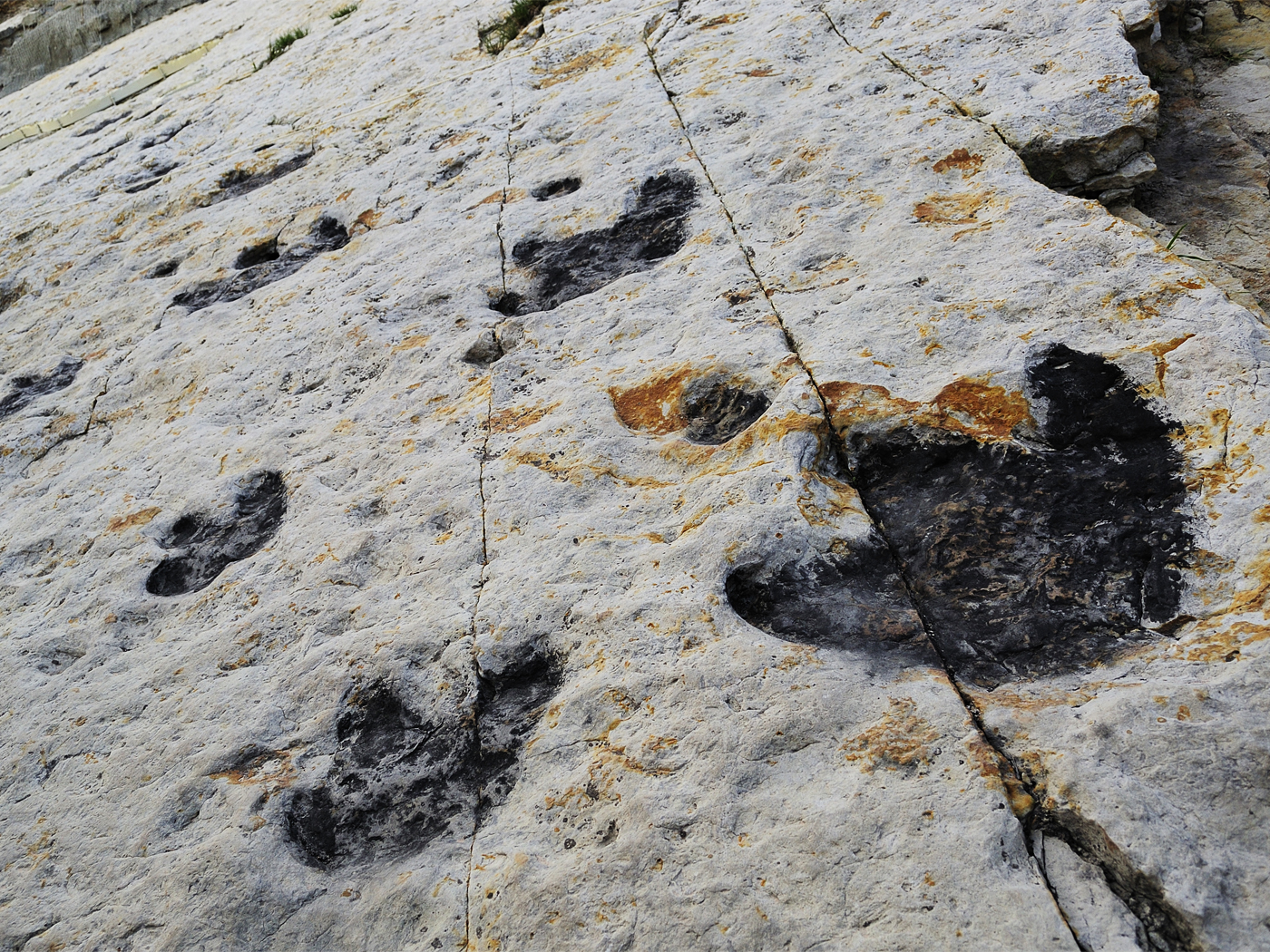
Another spectacular dinosaur fossil discovery baffled paleontologists who deny the historical accuracy of the book of Genesis. New Scientist recently reported the identification of a T. rex-like dinosaur from Upper Cretaceous system rocks in North Africa.1 What confounded the scientists were the phosphate-rich rocks in which the bones were found—rocks indicative of deposition in an open ocean.
The new species was dubbed Chenanisaurus barbaricus by its discoverer Nick Longrich of the University of Bath, UK.1 He identified the dinosaur from a jaw bone fragment found in the mines at Sidi Chennane, Morocco. He and his colleagues from Morocco, France, and Spain concluded the dinosaur was an Abelisaur—a type of theropod similar to the Tyrannosarus rex. Longrich determined that its teeth were worn from a life spent biting into bone, which suggests this dinosaur was a predatory meat-eater.
He added, “This find is unusual because it’s a dinosaur from marine rocks—it’s a bit like hunting for fossil whales and finding a fossil lion. It’s an incredibly rare find—almost like winning the lottery.”
But the discovery of a dinosaur in marine rocks should be no surprise to Longrich and his colleagues, as a group of paleontologists had concluded earlier that nearly all Cretaceous dinosaurs across Europe were buried in marine rocks.2
In their 2015 report, Zoltan Csiki-Sava and his co-authors reported just that—nearly all Late Cretaceous dinosaurs were found in marine sedimentary rocks, including chalk and limestone beds.3
Csiki-Sava’s team concluded, “Although these are isolated skeletal elements [individual bone fossils] that washed out to sea, they are remarkably common and have been reported in surprisingly large numbers since the early discoveries.”3
In 2012, researchers excavated a portion of a theropod dinosaur thighbone from beachfront marine rock north of Seattle.4,5 The fossil, also from Upper Cretaceous layers, was identified as the upper left femur of a theropod dinosaur similar in size to an adult T. rex, although the exact species is unknown. Oddly, the paleontologists who made that discovery found the thighbone while searching for ammonites—extinct marine invertebrates common in the sedimentary rocks exposed along beaches.
Researchers made similar discoveries of ankylosaurian and hadrosaurian dinosaur fossils in marine sedimentary rocks along the coasts of California, Oregon, Washington, and all the way north to Alaska.6
With all these finds, it’s now clear that the discovery of dinosaurs in marine rocks and/or mixed with marine fossils is the norm, not the exception.2,3 Why do secular paleontologists continue to be surprised by what they pull out of the ground? It’s likely because they have no other viable explanation outside of deep time and evolution for what they observe. If one rejects the possibility of a global Flood event, as described in Genesis, one is left with no other recourse.
However, creation scientists are not surprised that so many dinosaurs are mixed with marine fossils and are commonly found in marine sediments. Dinosaurs were rapidly buried by the salty Flood waters as they engulfed the continents, mixing the sediments, the ocean creatures and the terrestrial animals together. The evidence for the global Flood is found in the phosphate mines in Morocco and all over the world.
References
- New Scientist staff. African T.Rex was one of last dinosaurs alive before extinction. New Scientist. Posted on newscientist.com May 7, 2017, accessed May 5, 2017.
- Clarey, T. 2015. Dinosaurs in Marine Sediments: A Worldwide Phenomenon. Acts & Facts. 44 (6): 16.
- Csiki-Sava, Z. et al. 2015. Island life in the Cretaceous-faunal composition, biogeography, evolution, and extinction of land-living vertebrates on the Late Cretaceous European archipelago. ZooKeys. 469: 1-161.
- Hebert, J. 2015. Dinosaur thighbone found in marine rock. Creation Science Update. Posted on ICR.org June 4, 2015, accessed May 4, 2017.
- Peecook, B. R. and C. A. Sidor. 2015. The First Dinosaur from Washington State and a Review of Pacific Coast Dinosaurs from North America. PLOS ONE. 10 (5): e0127792.
- Geggel, L. Huge Dinosaur Thighbone Found on Washington Beach. LiveScience. Posted on livescience.com May 20, 2015, accessed online May 28, 2015.
*Dr. Clarey is Research Associate at the Institute for Creation Research.
Article posted on May 25, 2017.